Of everything we did on our Texas-to-the-Smokies road trip, Space Center Houston was the day I was most excited about, and somehow it still over-delivered. This is the official visitor center of NASA's Johnson Space Center - Mission Control's home turf - and it's the closest you can get to the moon without leaving Earth. If you have any space nerd in you at all, this is worth building a whole Houston day around.
What Space Center Houston Actually Is
Space Center Houston is the visitor gateway to Johnson Space Center, where NASA has run human spaceflight since the Gemini program. The main plaza sits just outside the fenced-off working space center, and inside you get a mix of hands-on exhibits, flown hardware, and the famous tram tour that takes you into the real Johnson campus.
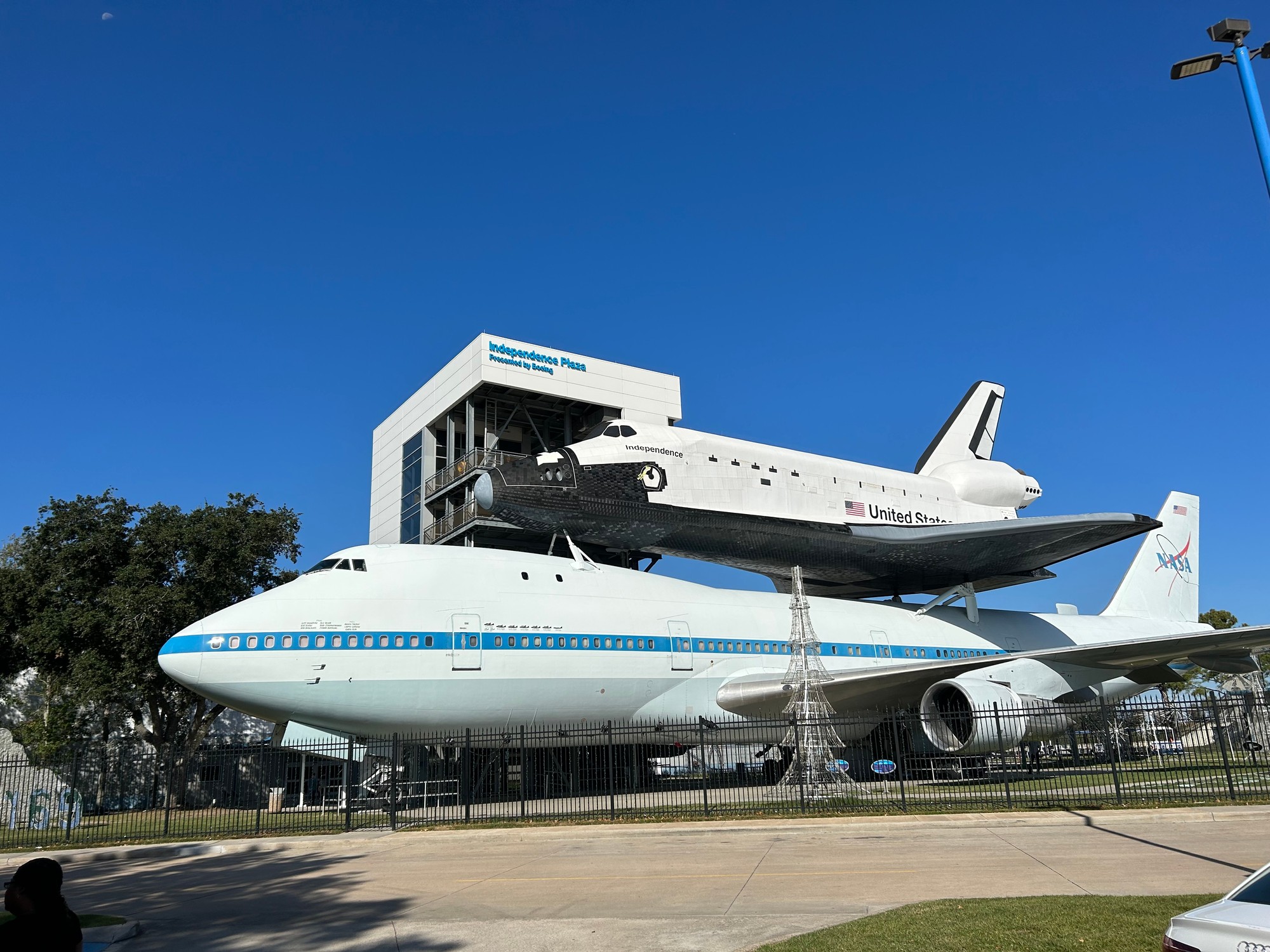
The two headline acts are outside the main building, and they set the tone before you even queue for anything. First, the Shuttle Independence, a full-scale shuttle replica, stacked on top of the original NASA 905 - one of the actual Boeing 747s that carried real shuttles piggyback across America after landings. You walk up into both: through the shuttle cabin itself, then out onto a platform where you can walk right under the 747's belly and look up through its open fuselage. Standing under the aircraft that carried a space shuttle is the moment it clicks that this place is the real deal.
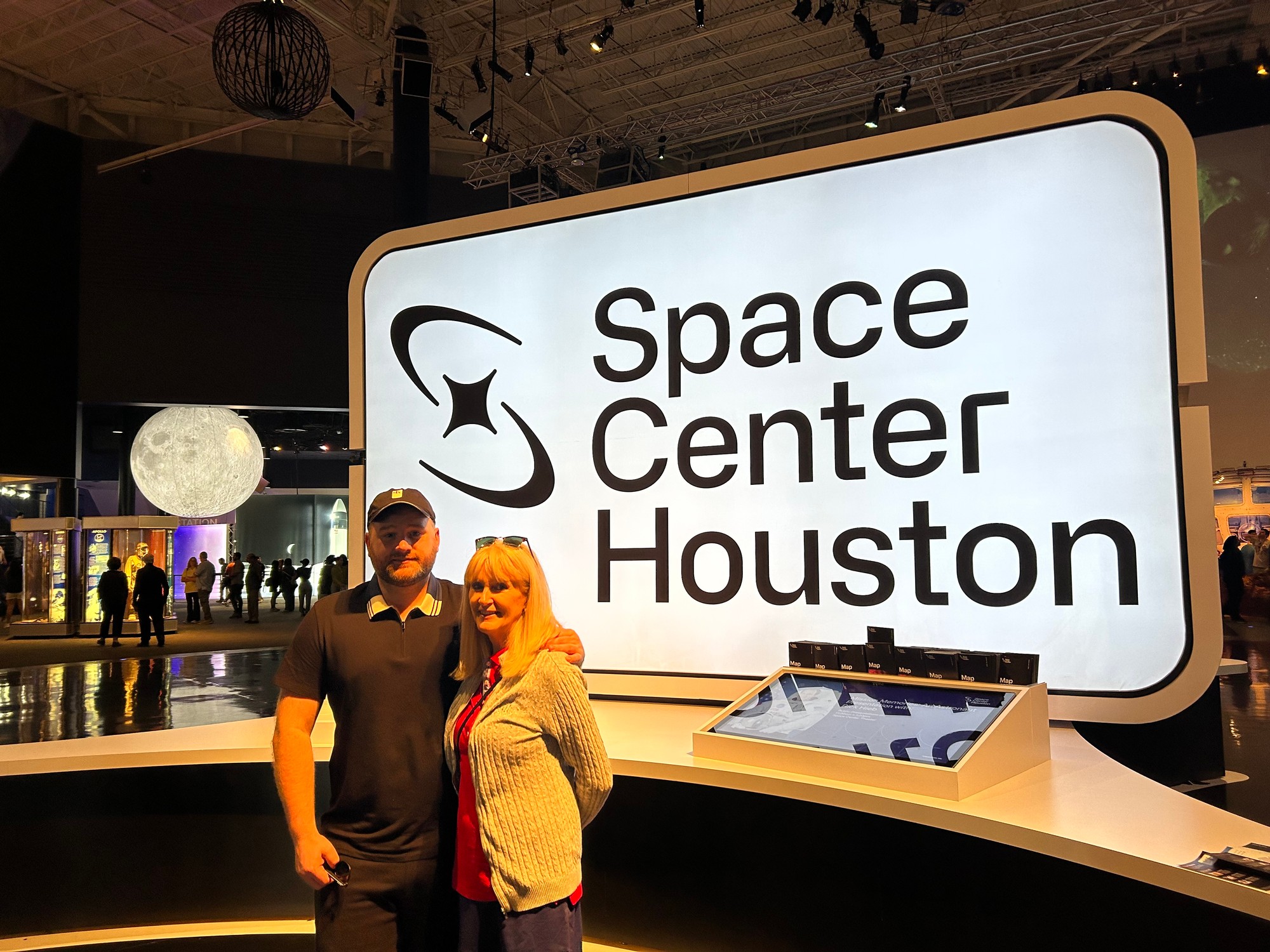
At the entrance, with the moon exhibit glowing behind us:
Independence sitting stacked on top of the original NASA 747 carrier aircraft:
The Tram Tour and Rocket Park
The tram tour is the part that takes you behind the fences, and it's included with admission - book your time slot early, because the good times go fast. Depending on the day, the tour winds past the astronaut training facilities, the historic Mission Control that guided Apollo 11 and Apollo 13, and out to Rocket Park.
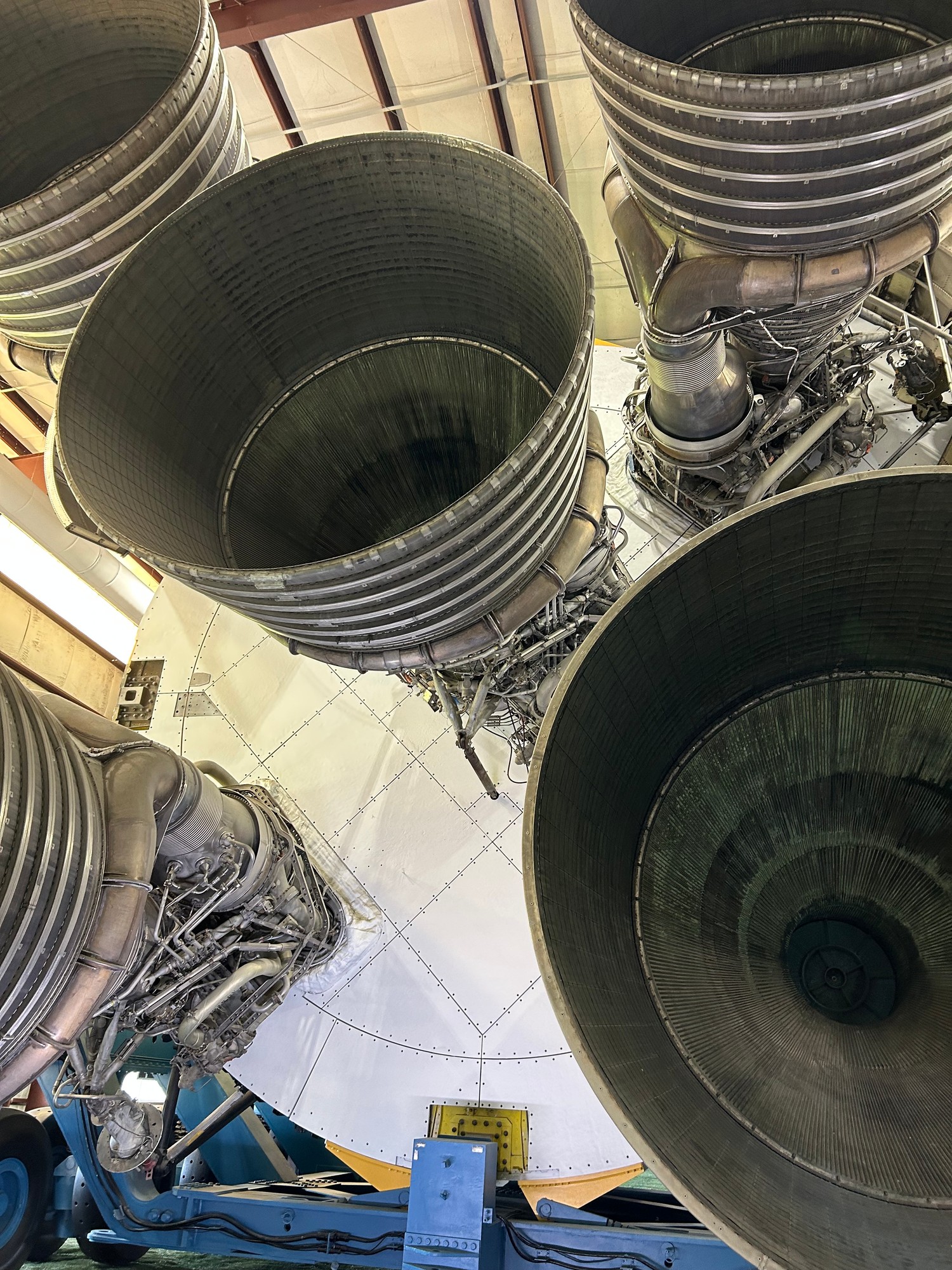
Rocket Park was my favourite stop of the whole day. An actual Saturn V moon rocket - the real thing, a flight-ready rocket that never flew - lies on its side, stage by enormous stage, inside its own hangar. Photos do not prepare you for it. Each of the five F-1 engines at the back is bigger than a van, and the whole machine is longer than a football pitch. This is the rocket that took humans to the moon, and you can walk its entire length.
Out in Rocket Park, stage by enormous stage:
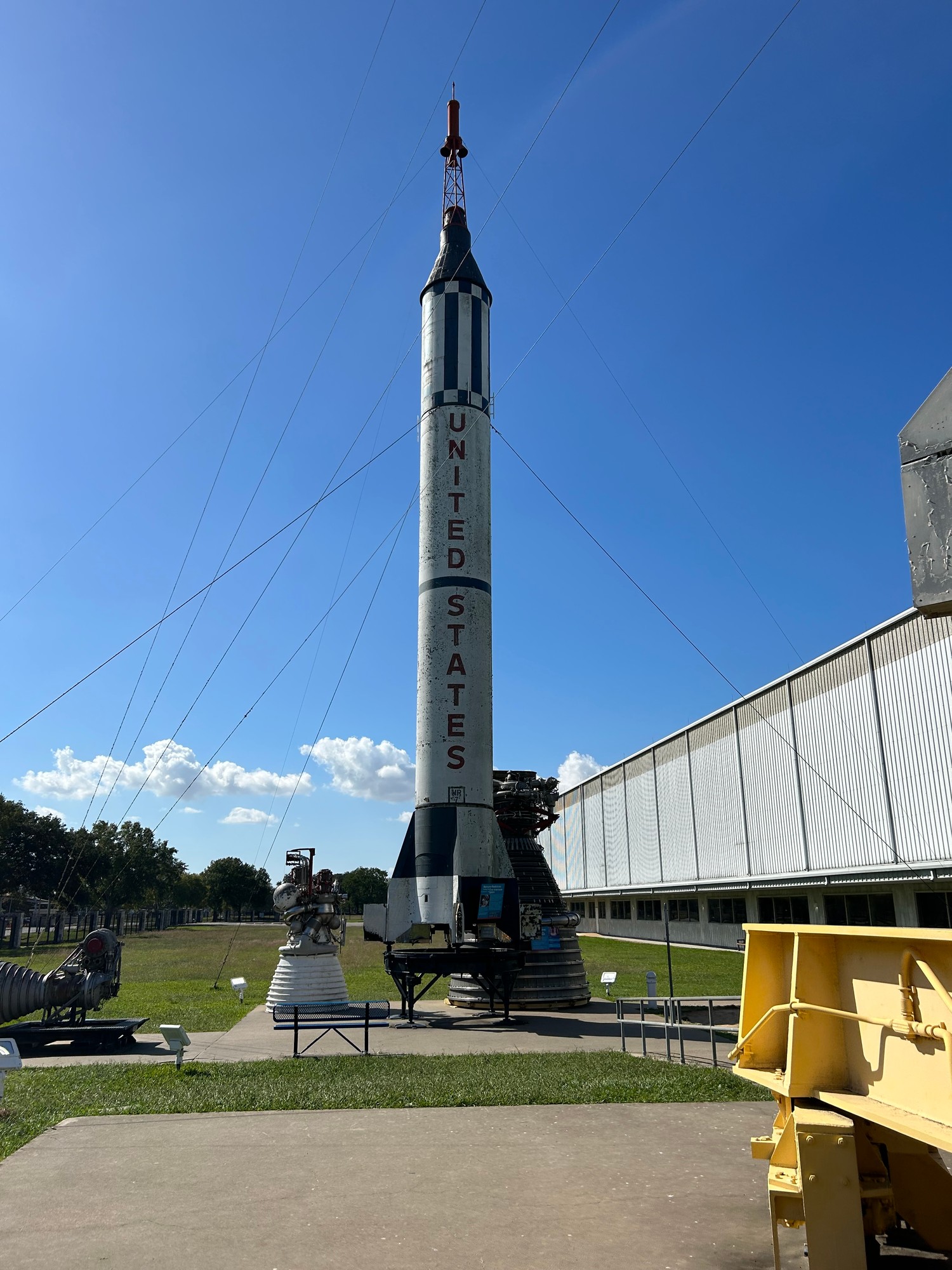
The park's quieter corner might be my favourite photo of the day - a Mercury-Redstone rocket standing tall, the type that put America's first astronauts into space, with rocket engines lined up around it:
Inside the Visitor Center
Newsletter
Get travel updates straight to your inbox
New guides, working holiday tips and honest advice from the road. No spam, unsubscribe any time.
Back in the main building, the exhibits fill a full day if you let them:
- The moon rock you can actually touch - polished smooth by half a century of visitor fingers, and somehow still one of the most humbling things you'll ever put a hand on
- Galaxy Lights, the space-themed light experience, especially worth it if you're visiting in the evening
- Mission Mars, the exhibit about the next chapter, with a real Orion capsule mockup you can climb into
- The astronaut gallery with actual flown spacesuits, including Apollo-era suits that walked on the lunar surface
- Kids' Space, if you're travelling with younger crew - my mother loved it as much as the rocket hardware, which says something
There are also live shows and presentations running through the day, often hosted by actual NASA staff and sometimes real astronauts. Check the schedule when you arrive and plan your exhibits around them.
Tips From My Visit
- Arrive at opening time. The tram tours and the shuttle exhibit are quietest first thing, and Houston's heat is no joke by midday
- Book the tram tour slot as soon as you're through the gate. It's included, it fills up, and Rocket Park is unmissable
- Give it a full day. We planned half a day and stayed until closing - between the tram tour, the Saturn V and the exhibits, you'll need it
- Do the shuttle exhibit before the tram, or after the crowds thin. The walk-up queue for Independence builds fast mid-morning
- Houston traffic is real. The visitor center sits south of the city near Clear Lake - budget extra time if you're driving in at rush hour
Plan Your Visit
- Official site: spacecenter.org - tickets, tram tour times and the daily schedule
- Where: 1601 NASA Parkway, Houston, Texas - about 40 minutes from downtown (the tram takes you inside Johnson Space Center, NASA's home of human spaceflight since 1961)
- Entry: general admission runs from about $29.95 to $39.95 for adults and $24.95 to $34.95 for children aged 4 to 11, with prices varying by date; booking online is cheaper than the box office, and under-4s go free
- What's included: the tram tour to Rocket Park, the Shuttle Independence and NASA 747 exhibit, all main exhibits and the live shows - we didn't pay for anything extra beyond the ticket
- Worth knowing: special experiences (like the Galaxy Lights evening event) are seasonal and can carry an additional charge, so check the calendar when you book
Final Thoughts
Kennedy Space Center in Florida gets the launches, but Johnson Space Center is where spaceflight actually lives - the training, the mission control, the people. Space Center Houston bottlenecks all of that into one very good day, and the Saturn V alone is worth the trip. Of everything on our Texas road trip, this was the day I'd repeat first.
Planning the same drive? Start with the United States Travel Guide: Tips From an Expat, and keep going with the Ark Encounter in Kentucky or the Sazerac House in New Orleans.
Newsletter
Get travel updates straight to your inbox
New guides, working holiday tips and honest advice from the road. No spam, unsubscribe any time.
Enjoying the guide?
There are plenty more where that came from: honest guides from every corner of Australia and beyond.