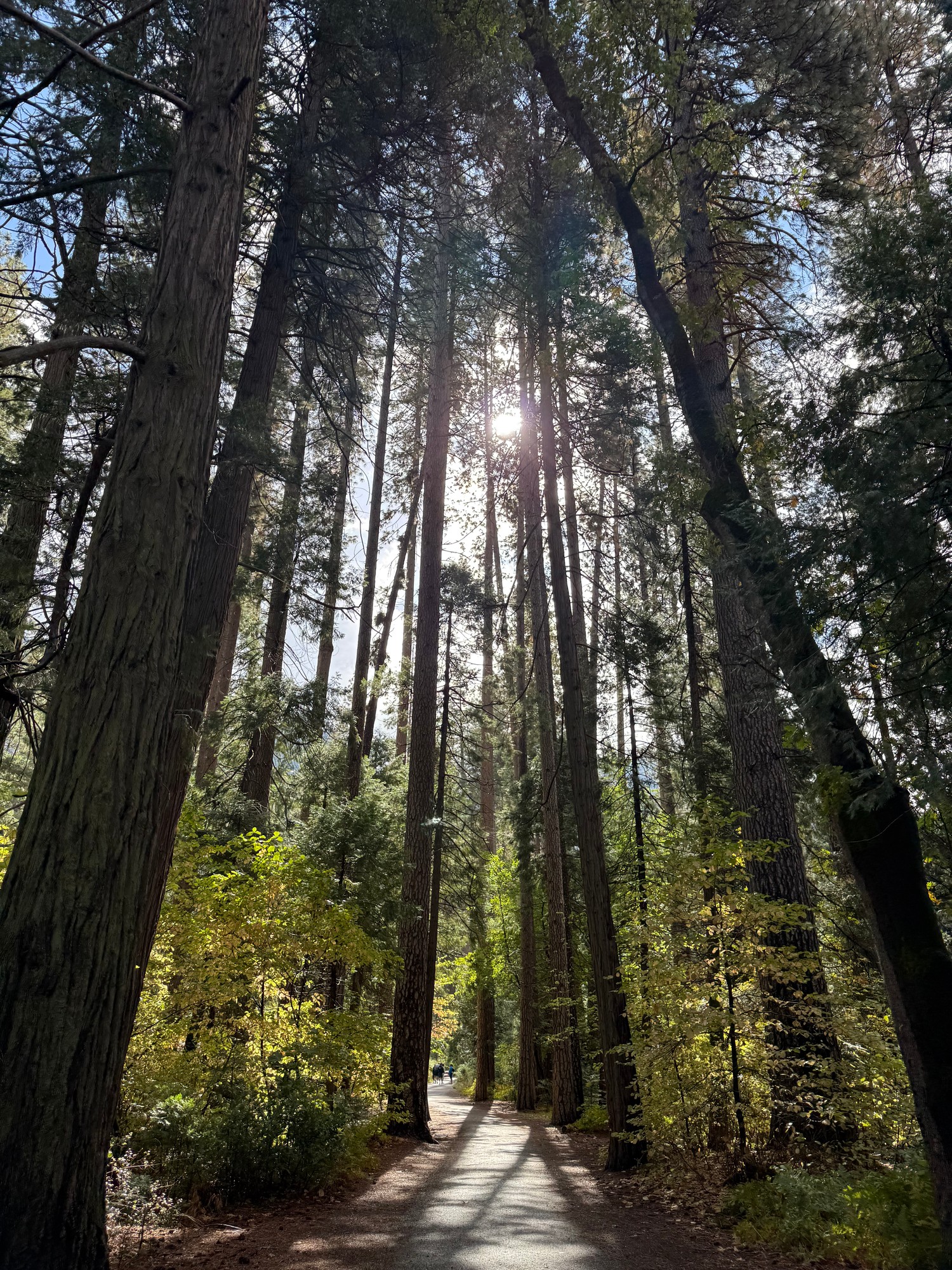
When I planned my Yosemite trip, I did the thing a lot of people end up doing: I stayed outside the park and drove in. Lodging inside Yosemite is limited and books out months ahead, so staying in a gateway town and driving in each day is the normal workaround. I based myself in Oakhurst, just outside the park's southern entrance, in an Airbnb, and this is what that trade-off was actually like for me - the honest version, not the brochure version.
The Trade-Off You're Making
Here's the deal in one sentence: staying outside gets you easier booking and better prices, and it costs you the gate. Every day starts with a drive to the entrance, and every evening ends with the drive back out. You're trading convenience for choice.
And be honest with yourself about that drive, because it's the real cost. From Oakhurst it took me over an hour each time, sometimes closer to an hour and a half, to get to exactly where I wanted to be - and once you've parked, you usually still have a walk ahead of you before the day really starts. That's the price of the gateway-town strategy, and it's exactly why the early start matters so much.
Was it difficult? Yes - and fun. That's genuinely how I'd sum the trip up. Yosemite is a big place with big distances between its headline sights, and adding a daily drive on top means you have to be organised in a way that staying in the valley wouldn't demand. But it never once felt like a mistake, and I'd do it the same way again. The full Yosemite travel guide covers the sights themselves; this is about the logistics.
What the Days Actually Looked Like
The rhythm that worked for me was simple: get to the gate early, then let the park do its thing.
- Go in early. This is the whole game. Arriving at the entrance before the mid-morning wave makes everything easier - parking on the valley floor, the overlooks, all of it. By the time the queues build, I was already standing at Tunnel View watching the clouds move across El Capitan
- One half of the park per day. Yosemite's sights split naturally: the valley floor and Tunnel View on one side, Glacier Point and Mariposa Grove on the other. Trying to do everything in a single loop from outside the park turns a fun day into a marathon
- Fuel, food and phone signal. Services inside a national park are limited and expensive. Sort the car out before you drive in, take food and water in with you, and don't count on signal for maps - download them offline first
- Check the entry reservation rules. At really popular times the park caps how many people can get in - only a set number of advance entry passes are released for peak-season days. If you're going at a busy time of year, book the reservation in advance instead of turning up and hoping. Check the National Park Service site before your trip
- Build in buffer. Mountain roads, park traffic and a queue at the entrance all add time you didn't plan for. I treated any timetable in Yosemite as a suggestion, not a promise
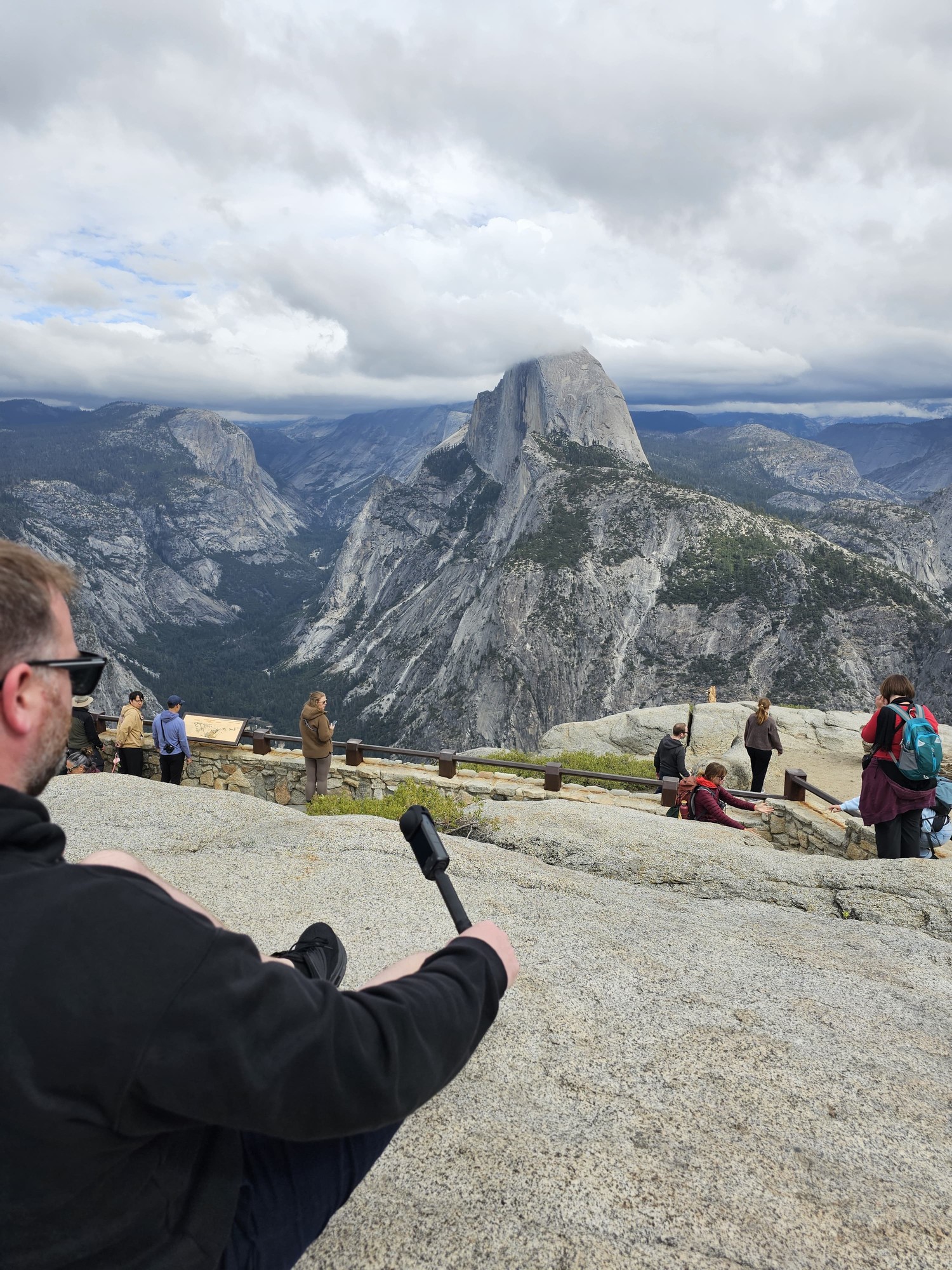
And then there was Glacier Point, which deserves its own paragraph. You drive up, step out, and the whole park is suddenly below you - the valley, the waterfalls dropping over the granite, and Half Dome right there in front of you. It was insane. I found a patch of granite, sat down, and just watched Half Dome for a while. That's me in the photo below, and it was honestly one of the best moments of the whole trip:
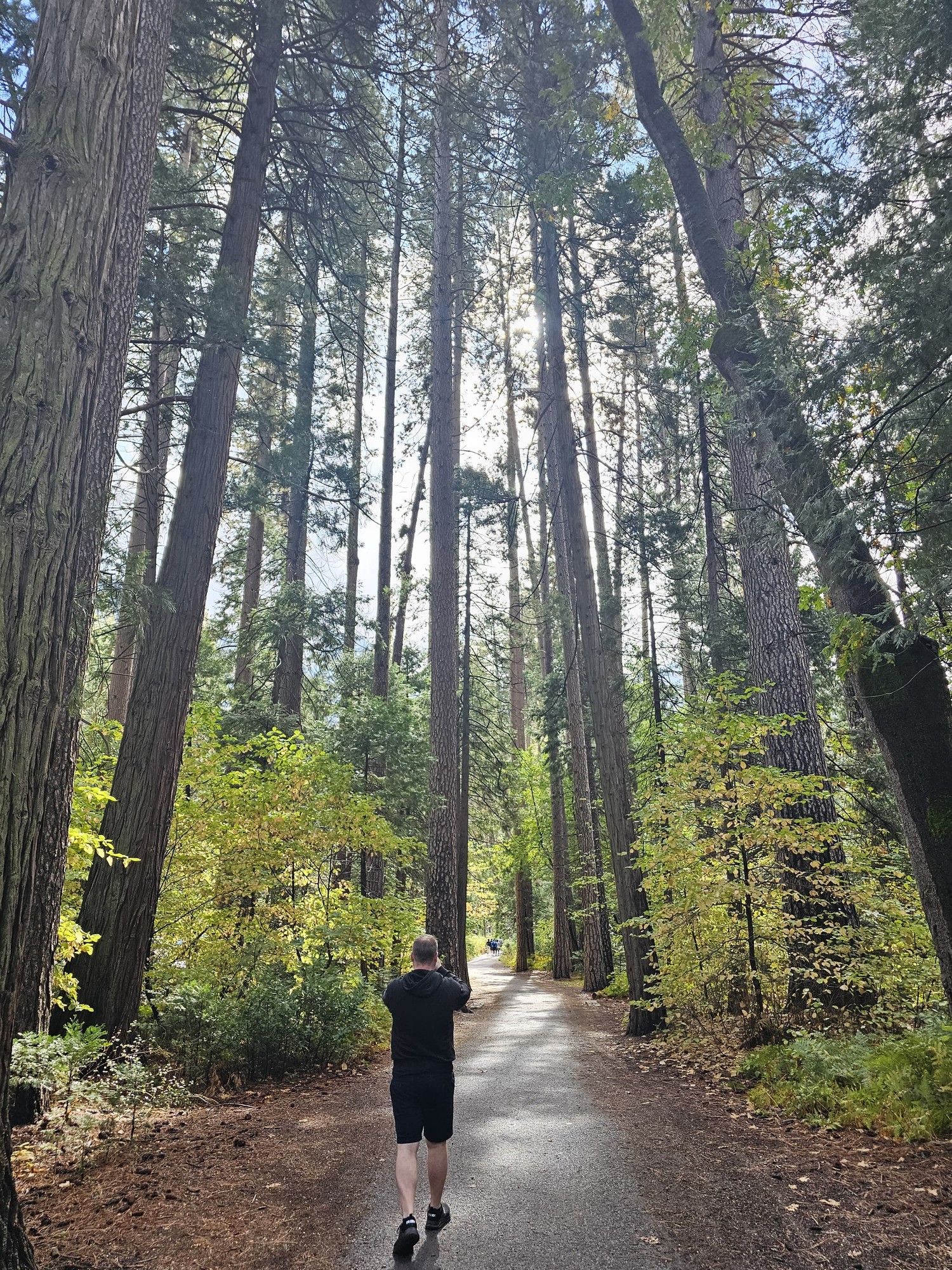
The Mariposa Grove days were the easy ones by comparison - the shuttle up, then a short walk between giants:
Was Driving In Worth It?
For me, yes - without hesitation. The drive itself is part of the experience: the road climbs through forest, and the park reveals itself gradually instead of all at once. There's something about working for a place like Yosemite that makes Tunnel View landing at the right moment feel earned rather than delivered.
And because I wasn't locked into the valley, the trip had variety a valley-only stay wouldn't have: mornings on the valley floor under El Capitan, afternoons up at Glacier Point looking down at Half Dome, and the giant sequoias of Mariposa Grove thrown in as well. The days were long ones, mostly on foot - Yosemite is a hiking park first, a driving park second - and coming home to a proper base each evening made that pace sustainable.
Where I Stayed: Oakhurst
Oakhurst sits just outside the park's southern entrance, and it turned out to be exactly the kind of base I wanted. It's a small town, but it has all the facilities you actually need after a day on the trail - supermarkets, fuel, and a proper spread of restaurants. The barbecue place was great: exactly what you want after a long day of hiking, and I'd point anyone staying there towards it. Here's Oakhurst on Google Maps:
Newsletter
Get travel updates straight to your inbox
New guides, working holiday tips and honest advice from the road. No spam, unsubscribe any time.
And a tip I wasn't expecting to need: a cinema. When you've been on your feet all day in the park, an evening film is the perfect low-effort way to relax and reset for the next day. It sounds trivial, but that balance - big hiking days, easy evenings - is what made staying outside the park work so well. And being based on the southern side meant Mariposa Grove was the easiest of the park's big sights to reach from town.
The Other Ways to Do It: Camping, Camper Vans and Valley Hotels
Staying in a gateway town is just one option, and it's worth knowing the others before you book.
Hotels in the valley. If you can get a booking, staying inside the park is the luxury version of this trip. The Ahwahnee is the famous one - a grand 1920s hotel with the best position in the valley - and the Yosemite Valley Lodge puts you right under Yosemite Falls. Cheaper and very much part of the experience are the canvas tent cabins at Curry Village, and down in the south, the Wawona Hotel sits near Mariposa Grove. All of it books out months ahead and runs at national-park-in-a-famous-valley prices, so reserve early or don't count on it.
Camping. Yosemite has campgrounds across the park, and the valley ones (Upper, Lower and North Pines) are the most fought-over - sites are released on Recreation.gov and the popular ones go within minutes. Fees were roughly $35-40 a night at the time of writing - check current prices - and you're camping properly: bear boxes, no food in tents, and book long before you fly.
Camper vans and RVs. A camper van is a genuinely good fit for Yosemite: you solve the lodging and the transport in one move, several of the park's campgrounds take vans and RVs, and waking up inside the park saves you the gateway commute entirely. Two things to know: you still need a campsite reservation (you can't just park and sleep), and most campgrounds have no hookups, so plan for off-grid nights.
Gateway towns by entrance. Oakhurst isn't the only option - each entrance has its own base:
- Oakhurst (Highway 41, south) - what I did: the best spread of restaurants and facilities of the gateway towns
- Fish Camp (Highway 41, just south of the entrance) - tiny and closest to the gate; quiet, with the Tenaya Lodge nearby
- El Portal (Highway 140, west) - the closest year-round base to Yosemite Valley itself
- Mariposa (Highway 140, further west) - a bigger, friendlier town with more accommodation and lower prices
- Groveland (Highway 120, north-west) - the natural base if you're arriving from San Francisco or the Bay Area
- Lee Vining (Highway 120 east) - the base for the eastern Tioga Pass entrance and the high country, but only in the warmer months: Tioga Road closes over winter
Worth knowing how the entrances sit on the map, because it changes which town makes sense: the southern entrance is on Highway 41 past Oakhurst and Fish Camp, the western entrance on Highway 140 through El Portal (the most direct to the valley), the north-western Big Oak Flat entrance on Highway 120 via Groveland, and the eastern Tioga Pass entrance on the far side of the high country. Here's the park itself on Google Maps:
Whichever you pick, the same rule applies as everywhere in this article: check the drive time to your first stop of the day, not just to the entrance sign, and leave earlier than feels necessary.
Who Should Stay Outside, and Who Shouldn't
- Stay outside if: you're booking late, watching costs, or staying more than a couple of nights and happy to drive. This is the option that made my trip possible at all - an Airbnb in Oakhurst gave me a comfortable base with restaurants, a supermarket and even a cinema for the evenings
- Pay for inside-the-park if: you want sunrise and sunset in the valley without a headlight-lit drive on either side of it, or you're travelling in peak season and want to skip the daily commute entirely
- Either way: book as early as you can. Yosemite is one of the most visited national parks in the United States, and both inside lodging and the good gateway options go early
Final Thoughts
Staying outside Yosemite and driving in is a trade, and I'd make it again: a bit of daily effort in exchange for a trip that worked. Yosemite itself is beyond argument - I came away with more video than photos, which tells you how much there was to take in. If you're weighing up the same decision, that's my honest verdict: difficult, fun, and absolutely worth it.
Read next: the Yosemite Travel Guide for the sights and planning, the California Travel Guide for the rest of the state, and the United States Travel Guide for everywhere else.
Newsletter
Get travel updates straight to your inbox
New guides, working holiday tips and honest advice from the road. No spam, unsubscribe any time.
Enjoying the guide?
There are plenty more where that came from: honest guides from every corner of Australia and beyond.