Napa Valley is the most famous wine region in America, and it earns it: forty-odd miles of valley floor north of San Francisco, stacked with wineries that range from farmhouse tastings to a full-scale 13th-century-style Tuscan castle. I've done the valley a few times now, and this guide covers how I'd plan it - with the deep dive on **Castello di Amorosa**, the castle I'd call the single most memorable tasting in California.
Castello di Amorosa: The Castle Winery
Start with the headline act. **Castello di Amorosa** in Calistoga is a genuine, full-scale 13th-century-style Tuscan castle - around 120,000 square feet, more than a hundred rooms, built brick by brick with hand-made materials over more than a decade by vintner Dario Sattui, who opened it in 2007. It's not a facade with a tasting bar bolted on: four of its eight levels are underground, and the whole thing is a working winery. I toured it on my last Napa trip and it lived up to every bit of the hype.
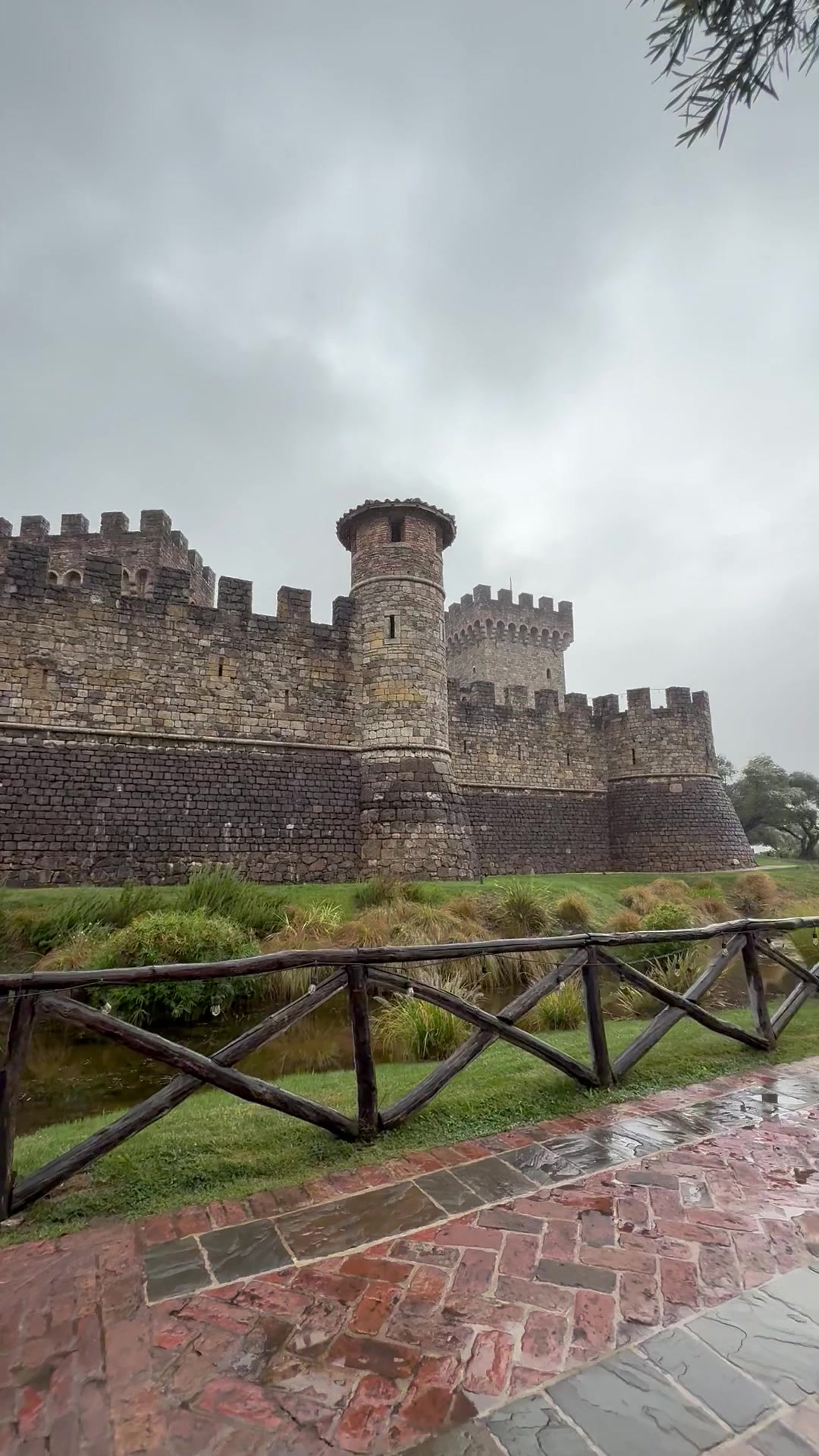
The first sight of it, over the lawn with the moat and towers in front, does not look like anywhere else in Napa:
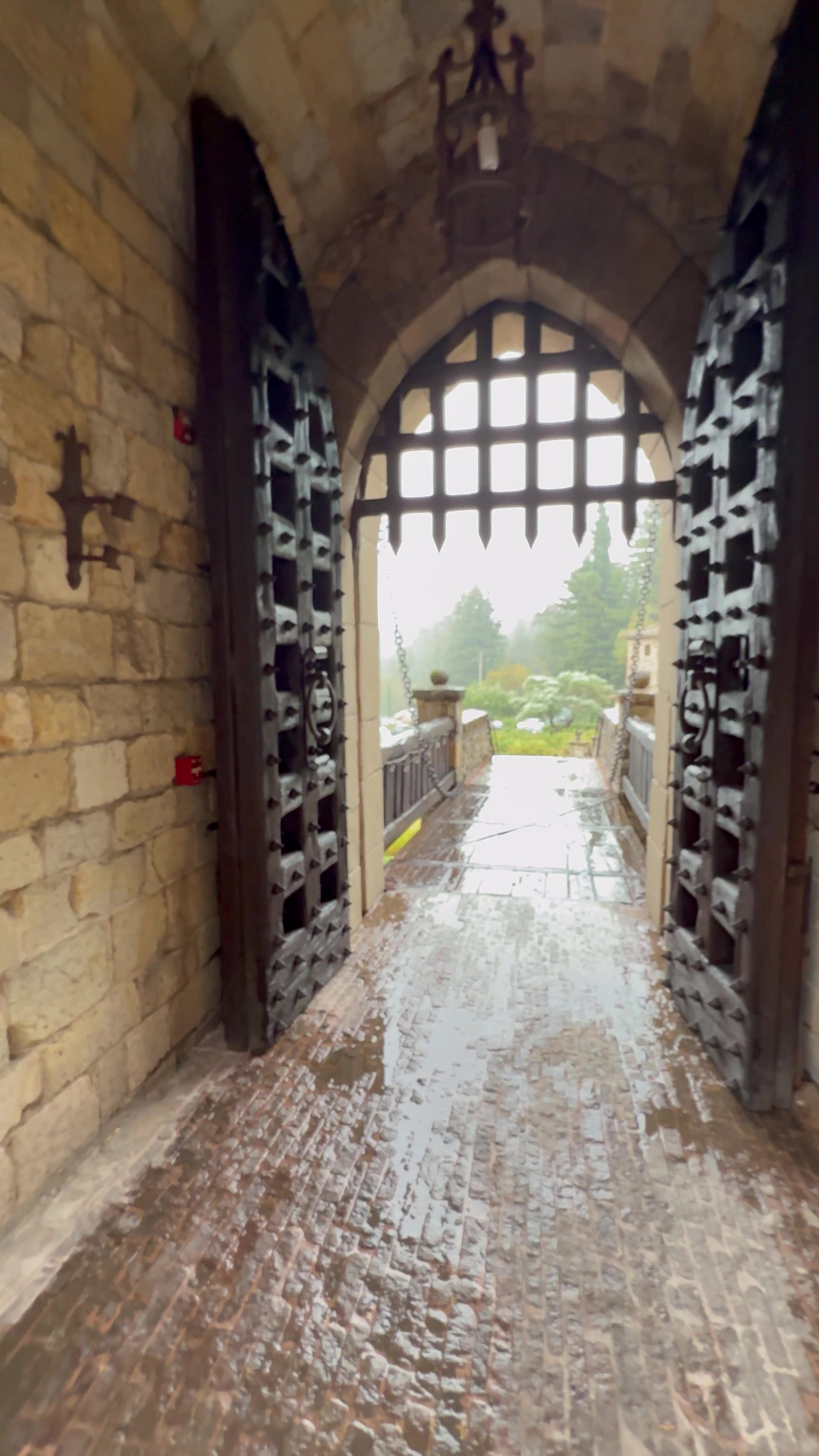
You enter the proper way - across the drawbridge, under the portcullis:
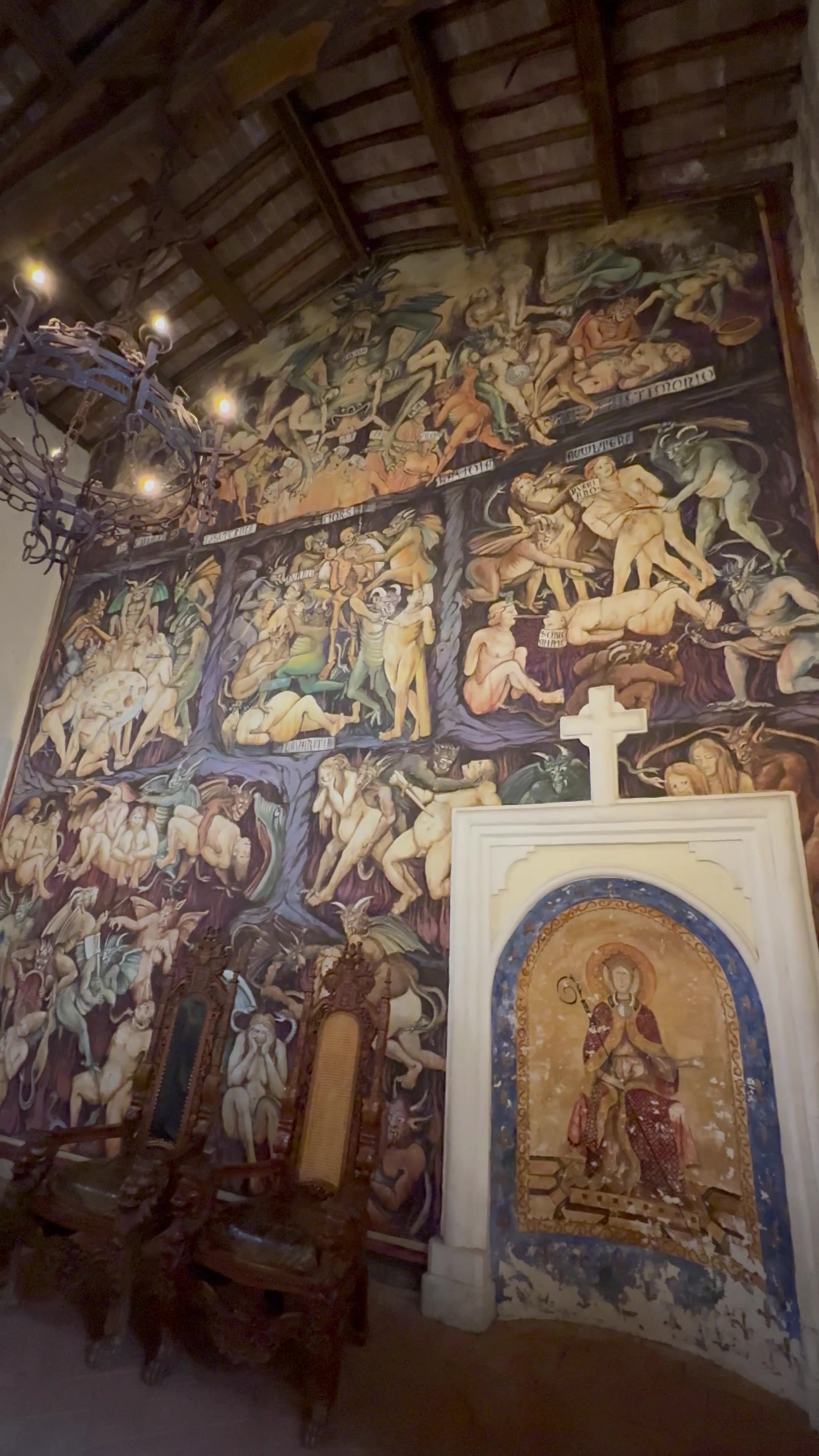
Inside, it's the details that get you: hand-forged ironwork, antique furnishings Sattui collected in Europe, and frescoed walls where you'd least expect them. The Great Hall is the showstopper - a two-storey room with a brick-vaulted ceiling, tapestries and a huge fireplace - and there's even a frescoed chapel on the underground level, painted in the style of a medieval Italian church:
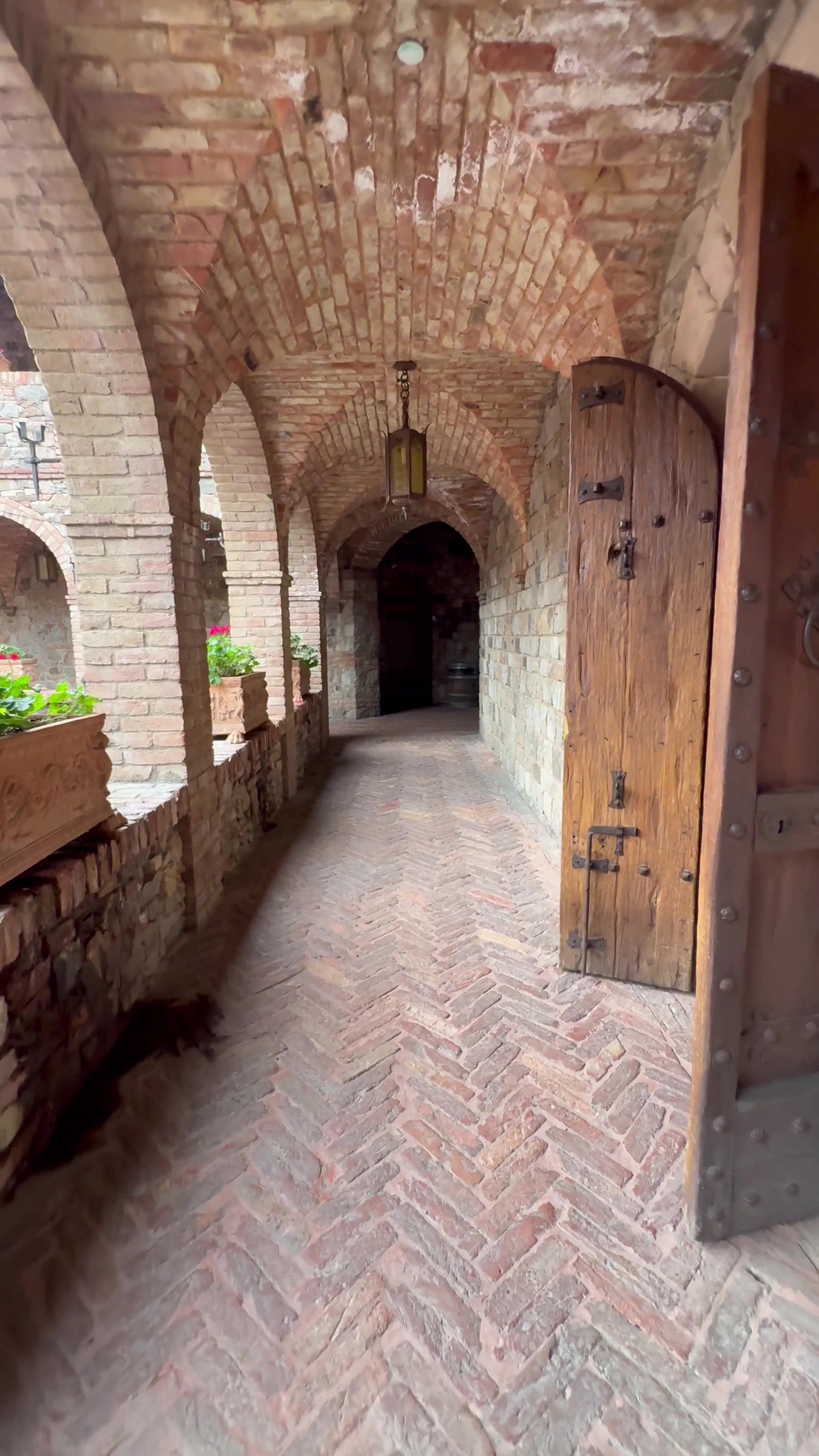
My favourite corners were the quieter ones: the brick-vaulted loggias running along the courtyard walls, arches and lanterns and flower boxes the whole way:
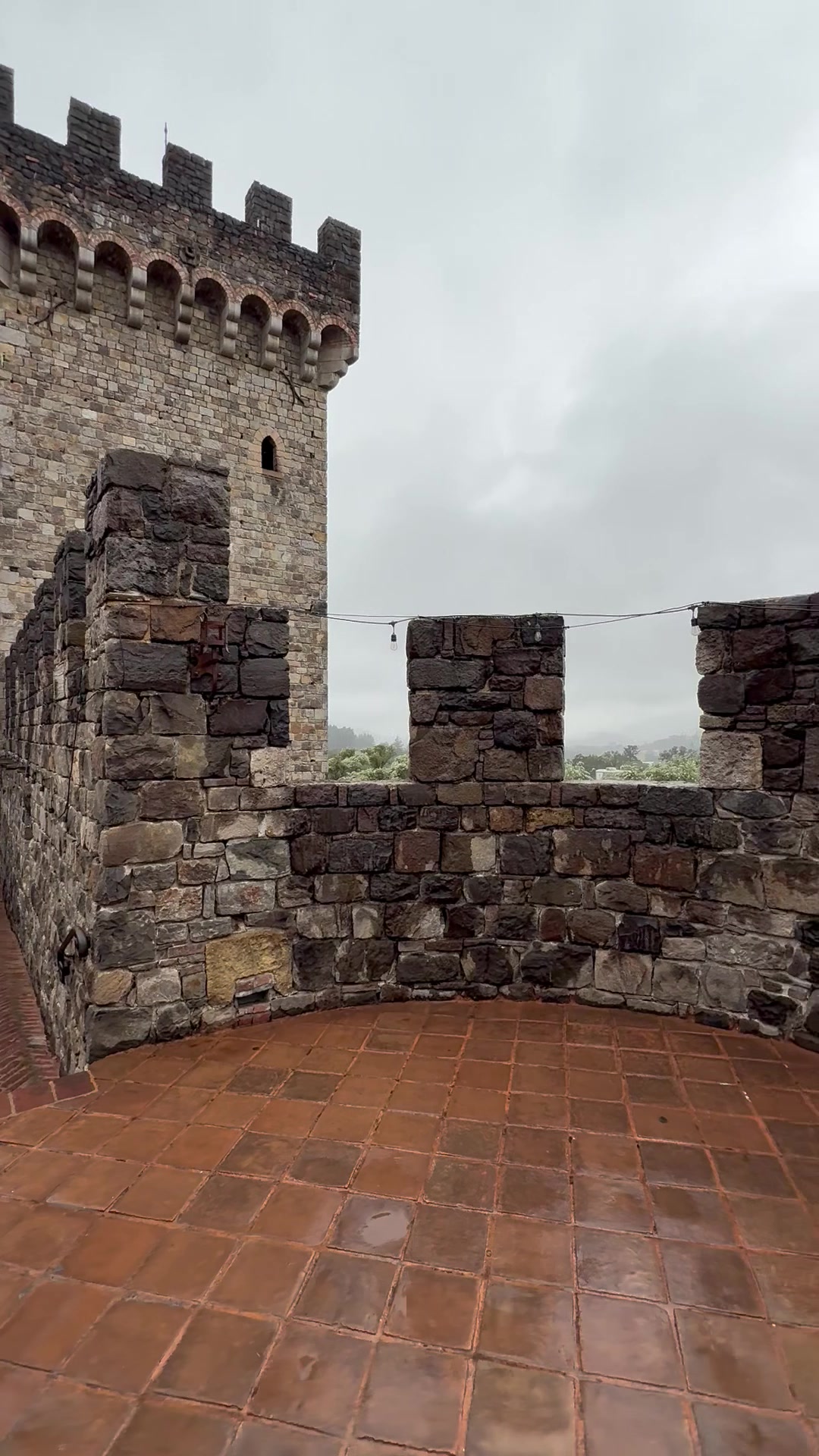
And you can climb up to the ramparts, where the crenellated walls look out over the vines and the hills - a view no other tasting room in the valley can offer:
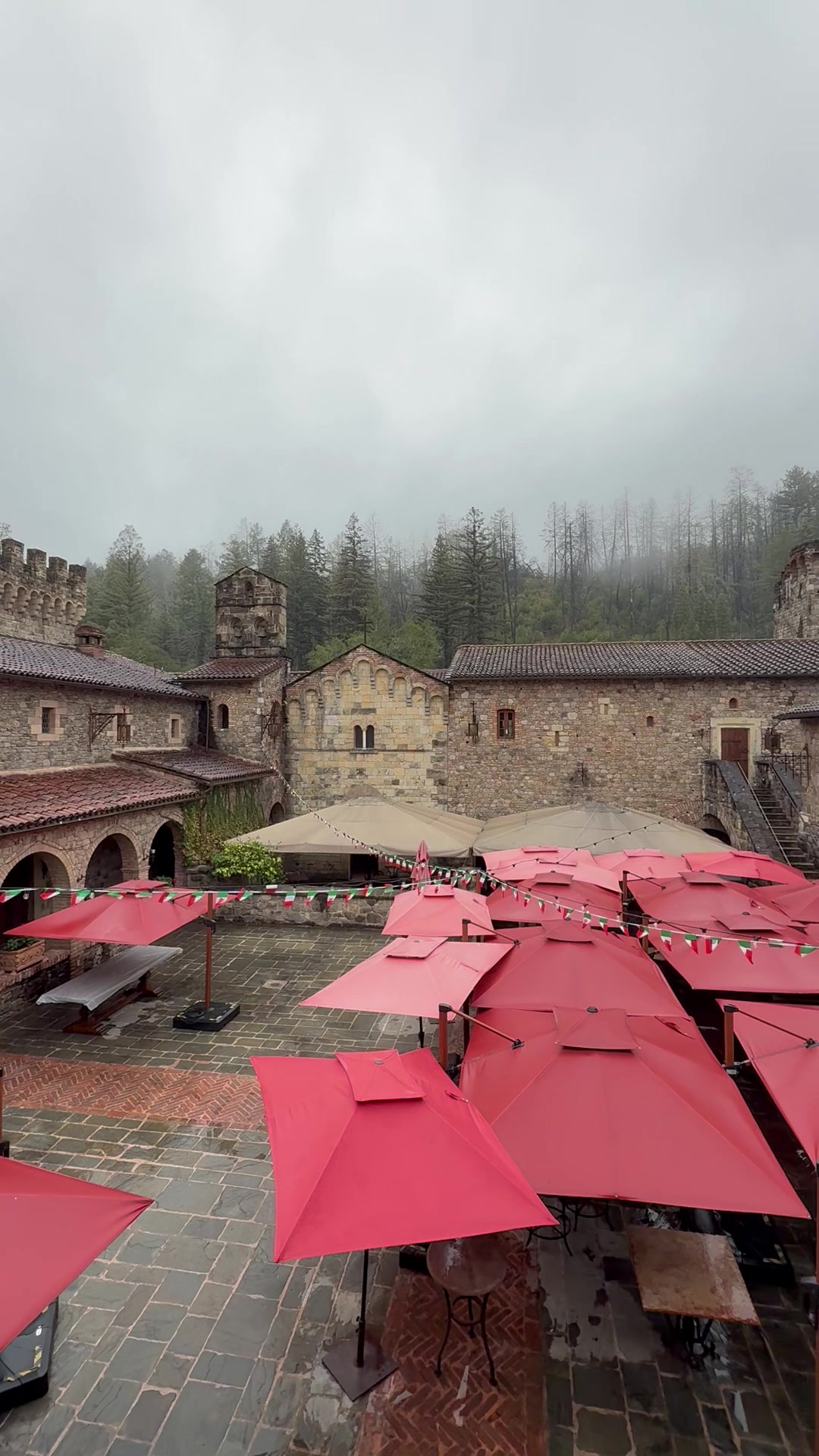
Back down in the courtyard, the red umbrellas come out for the tastings:
And the tastings themselves are proper: the general admission tasting (it was $45 when I visited) covers a lineup of their wines, and there are harder-to-book tours that add the dungeon, the torture chamber and the underground cellar levels. Book online ahead - weekend slots go fast. One warning from experience: the tour involves a lot of stairs and uneven stone floors, so wear real shoes.
The Rhine House at Beringer
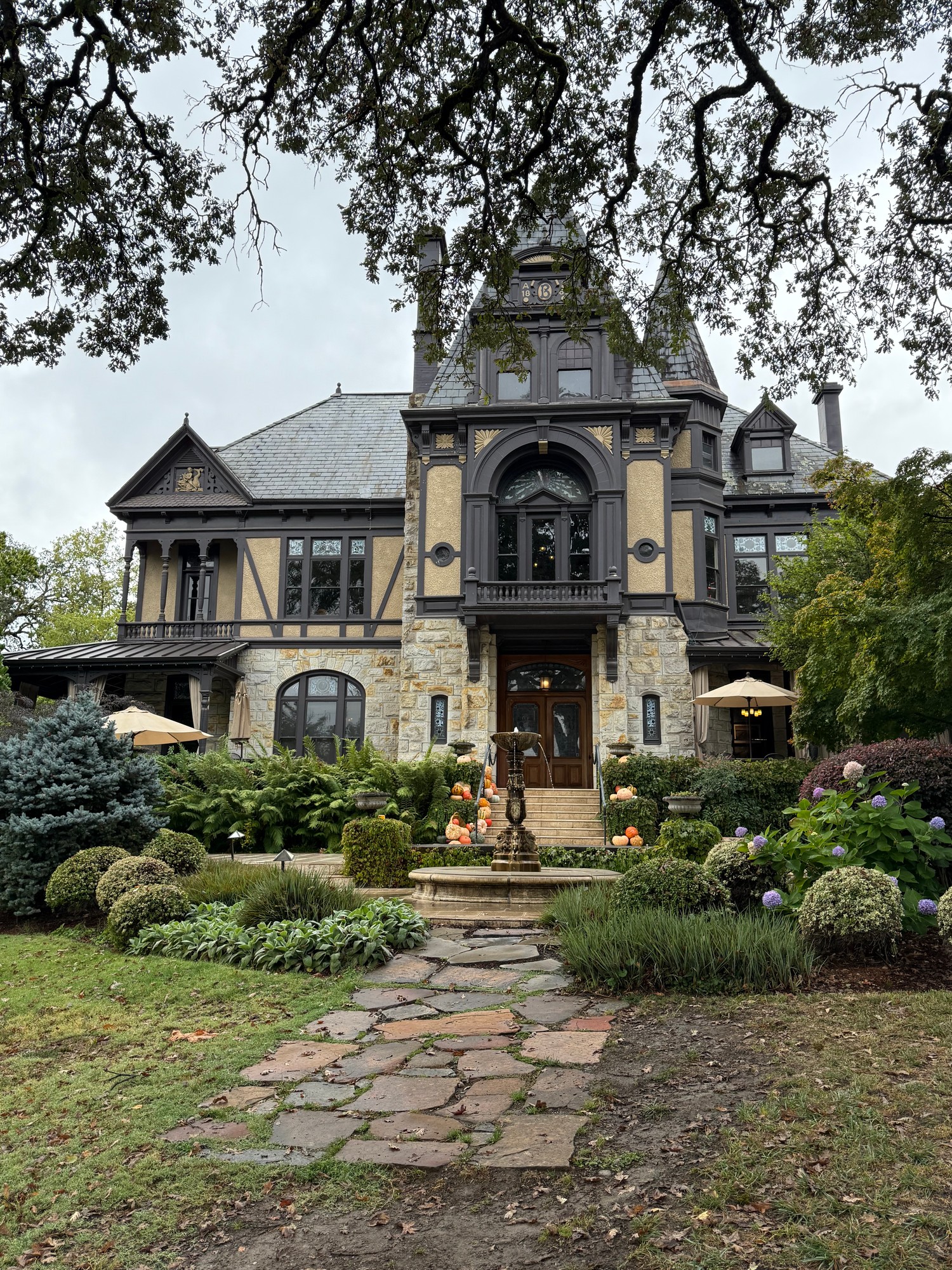
The other must-see building in the valley is the **Rhine House at Beringer Vineyards** in St. Helena, built in 1884 by the Beringer brothers as a statement piece of their German homeland: turrets, slate spires, carved woodwork, stained glass, and gardens that go all out around it. It's one of the most beautiful winery buildings in the country, and the historic estate tours run through it.
Beringer is one of the oldest continuously operating wineries in Napa, the tastings are easy to book, and it pairs nicely with a castle morning - the two are about fifteen minutes apart up Highway 29.
Downtown Napa
Skip-town advice most first-timers miss: leave an evening for downtown Napa itself. The riverfront along the Napa River is the pleasantest surprise in the valley - restaurants, wine bars and the stone bridge at sunset:
Newsletter
Get travel updates straight to your inbox
New guides, working holiday tips and honest advice from the road. No spam, unsubscribe any time.
It makes a better base than the smaller valley towns for a multi-day trip, with more restaurants and easier prices than St. Helena or Calistoga.
How to Plan a Napa Day
The mistake everyone makes is over-booking. My rules after a few trips:
- Two wineries a day, maximum three. Tastings are bigger than they look, and by the third stop everything tastes like the third stop
- Pick a designated driver, or join a tour. Or do what the locals do and hire a driver for the day - it costs less than a DUI and everyone enjoys the day
- Book ahead on weekends. Napa gets busy, and the good tastings - especially the castle tours - sell out
- Eat properly. Oxbow Public Market in downtown Napa is the classic lunch stop; most wineries don't do food beyond a plate of cheese
- Stagger the styles. A castle tour, a grand old estate like Beringer, and one small family winery is a better day than three near-identical tasting bars
Other Wineries Worth Knowing
The valley runs from Calistoga in the north to Napa town in the south along Highway 29 and the quieter Silverado Trail. Beyond the castle and Beringer: **Inglenook** at Rutherford in its grand chateau, **Robert Mondavi** in Oakville for the classic Napa cabernet, and the small family operations along Silverado Trail where tastings are cheaper and quieter. And if you want to stretch the trip, Sonoma County next door is the laid-back counterpart - the California guide covers it.
When to Go
September and October are harvest: the valley is at its most beautiful and its most crowded and expensive. Spring is the smart alternative - green hills, mustard flowers between the vine rows and easier bookings. Summer is reliable and hot; winter is quiet, moody and the best-value season.
Plan Your Visit
- Getting there: about 90 minutes from San Francisco without traffic. You need a car in the valley, or a booked tour/driver
- How long: one long day covers the highlights; two days lets you split Highway 29 and Silverado Trail
- Budget: tastings run roughly $30-60 each, the Castello tour around $45 and up, and Napa hotels are the priciest part - downtown Napa or neighbouring towns soften the blow
- Don't miss: the castle. Even people who think they're "not into wine" love Castello di Amorosa
Final Thoughts
Napa does spectacle better than any wine region I've visited, and Castello di Amorosa is the spectacle: a real castle, with real wine, in the middle of California. Book it, climb the ramparts, then finish the day with dinner on the Napa River. Salute.
Building a California trip? Start with the California Travel Guide, the San Francisco Travel Guide or the Los Angeles Travel Guide, and keep reading with Salvation Mountain and East Jesus.
More World Travel Guides
- California Travel Guide: San Francisco, Yosemite, Napa and the Coast
- San Francisco Travel Guide: The Golden Gate, Alcatraz and the Hills
- Los Angeles Travel Guide: Hollywood, Griffith and Getting LA Right
- United States Travel Guide: Tips From an Expat
Newsletter
Get travel updates straight to your inbox
New guides, working holiday tips and honest advice from the road. No spam, unsubscribe any time.
Enjoying the guide?
There are plenty more where that came from: honest guides from every corner of Australia and beyond.