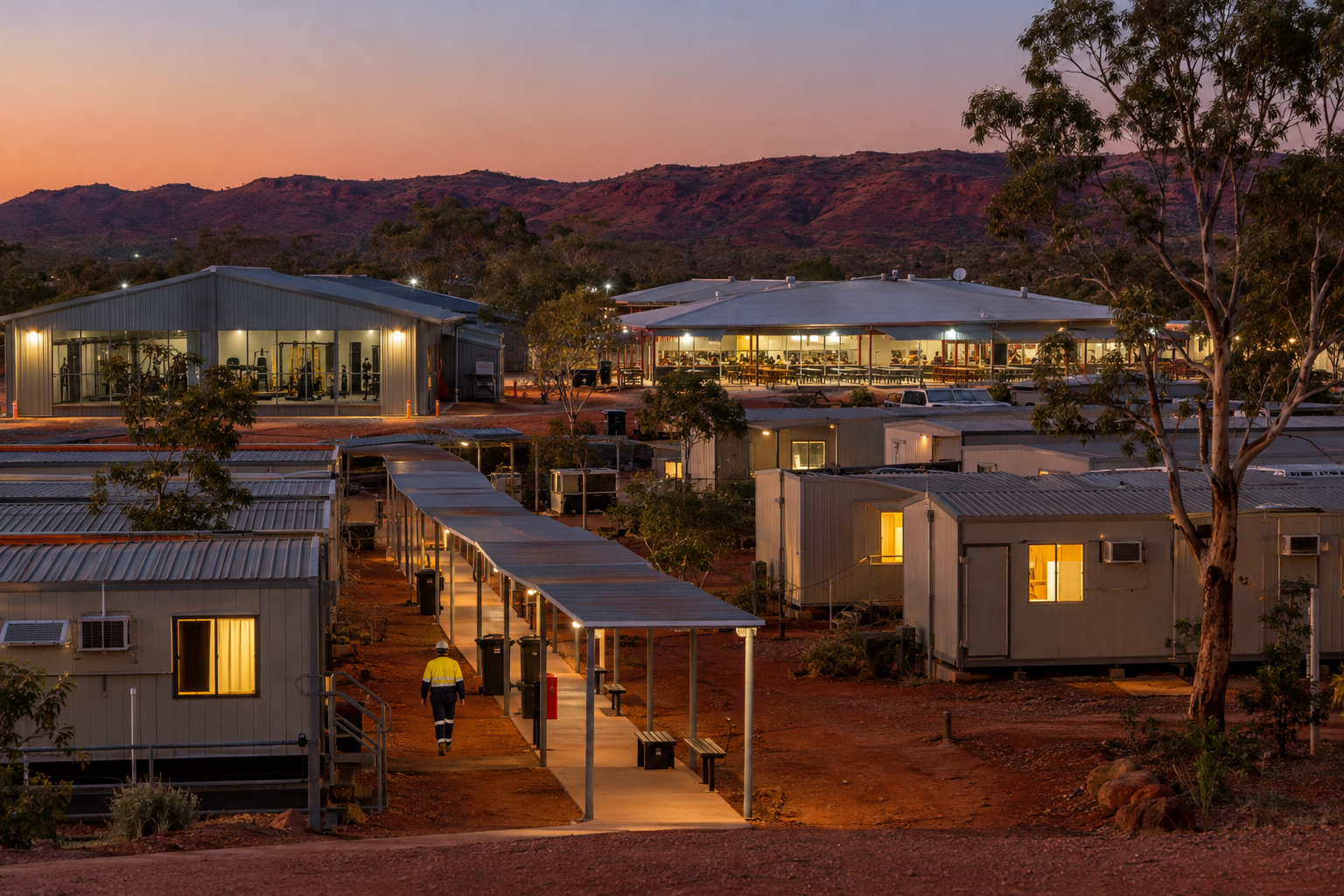
You've sorted the tickets, landed the job and worked out your roster. Now the question everyone actually wants answered: what's living in a FIFO camp really like?
The short version: it's better than most people imagine, but it's not a hotel, and knowing what to expect before your first swing makes a massive difference.
Recommended: FIFO Mining Rosters Explained: 2/1, 8/6, Even Time & More
What Is a FIFO Camp?
A FIFO camp (often called a "village") is the accommodation complex where fly-in, fly-out workers live while they're on site. Because mines are usually hours from the nearest town, the camp is your home, restaurant, gym and social scene rolled into one.
Camps range from a few dozen rooms to villages housing thousands of workers. Big operations in the Pilbara run permanent villages with facilities that rival small outback towns; smaller exploration camps can be a lot more basic.
A few quick facts:
- Your employer or the site's village operator provides it - you don't pay rent or book it yourself
- All meals are included at the mess (the camp canteen)
- Room cleaning is usually included - your room gets serviced while you're on shift
- Most camps are dry - no alcohol on site (mines with integrated towns are the exception)
Your Room: What You Actually Get
The standard room is a single demountable unit, and it's genuinely yours for the swing. You'll typically get:
- A single bed (sometimes a double), wardrobe and desk
- Your own ensuite bathroom - toilet, shower and basin. Sharing bathrooms is old-school and rare now
- Air conditioning, which is non-negotiable in the Pilbara summer
- A bar fridge, TV and (usually) a small microwave and kettle
- Wi-Fi - quality varies wildly between camps, from genuinely decent to "works if you lean out the window"
Some newer villages have gone upmarket: pool-side rooms, bigger ensuites, dedicated quiet wings. But the honest baseline is: small, private, clean and air-conditioned. Think basic hotel room, not student hostel.
Pro tip: if your room faces the walkway or the mess, you'll hear foot traffic all night. Long-term workers bring earplugs regardless - between night-shift workers heading to bed at 7am and day-shift alarms at 4:30am, quiet isn't guaranteed.
The Mess: Where Everyone Eats
The mess is the heart of any camp, and the food is one of the underrated perks of FIFO life.
- Breakfast, lunch, dinner and "smoko" (morning/afternoon tea) are all provided
- Expect proper quantities: hot breakfasts, roast nights, curries, salads, sandwiches for crib (your packed lunch on shift)
- Dietary requirements are usually catered for if you flag them on day one
- The catch: camp food is tradie fuel. If you eat everything on offer for three weeks straight, you'll understand why camp gyms exist
On night shift, the mess runs night rations, but options are more limited than the daytime spread. Lots of night workers pack extra crib from dinner.
Recommended: Is FIFO Work Worth It? 9 Biggest Pros & Cons
Camp Facilities: What Villages Have
Facilities depend on the camp's size and operator, but here's what you can reasonably expect at a modern village:
- Gym - the most important facility in the camp. Most are well-equipped with weights and cardio machines, and they're busy before and after shifts
- Laundry - free washing machines and dryers, usually in dedicated laundry blocks
- Recreation areas - TVs, pool tables, table tennis, sometimes a basketball court, pool or cricket net
- Phone coverage and Wi-Fi - most camps now have signal, but check before you go if you're on a specific network
- On-site medical - nurses on site, plus emergency response teams
- Kiosk or shop - snacks, drinks, toiletries and often a coffee machine (which you'll pay for - mess coffee is free but variable)
Newsletter
Get travel updates straight to your inbox
New guides, working holiday tips and honest advice from the road. No spam, unsubscribe any time.
Bigger camps add things like outdoor cinemas, hairdressers, and chapels. Smaller exploration camps might be a row of rooms, a mess tent and a shaded smoko area - check with your recruiter so you're not surprised.
Dry Sites and Camp Rules: Know Before You Go
FIFO camps have strict rules, and breaking them can send you home:
- No alcohol and no drugs. Most mine sites are dry. Random drug and alcohol testing is standard, and screening starts before you even fly in
- Quiet hours are enforced for night-shift sleepers, usually during the day
- No visitors in rooms. It's a workplace, and the rules are there for safety
- Smoking is restricted to designated outdoor areas
- Safety culture is everything. PPE zones, traffic management and incident reporting are enforced from day one. Look after your mates and follow the process
Recommended: Is FIFO Dangerous? Facts & Safety Tips to Know
What to Pack for Your First Swing
Villages provide the food and the room, but the little things make camp life comfortable. A proven first-swing packing list:
- Work gear: high-vis shirts, work pants, steel-cap boots, socks and underwear for every day (laundry's free, but backups save you), gloves, hat and sunglasses for outdoor breaks
- Bedding extras: your own pillow (camp pillows are notorious) and a couple of spare pillowcases
- Sleep kit: earplugs, an eye mask and a good playlist or podcasts for winding down
- Toiletries and medications for the full swing, plus a small first-aid kit for blisters and strains
- Entertainment: headphones, a tablet or e-reader, downloaded shows (don't rely on camp Wi-Fi)
- Money: a bit of cash or card for the kiosk - everything else is covered
- Snacks and extras: your own coffee, hot sauce or protein bars if you're fussy
Keep it in one sturdy duffel bag or bin. You'll be hauling it through airports and buses every swing, so pack like someone who's done it before: everything has a purpose.
Recommended: 10 FIFO Mining Tickets to Seriously Boost Your Resume
Camp Life by the Roster: The Honest Trade-Offs
Camp life is what you make of it, but be realistic about the downsides:
- It's repetitive. Same room, same mess, same walk to the bus. Good routines make it work; without one, swings drag
- It's dry and quiet. If you need nightlife, FIFO will be a shock. The social scene is gym sessions, dinner with your crew and whatever rec facilities your camp has
- Night shift flips your world. Sleeping in a sunlit room takes blackout curtains, eye masks and discipline
- Homesickness is real. Two weeks is a long time when something's happening at home. Video calls help, and even-time rosters (like 7/7) make it easier to stay present
The workers who thrive in camps treat them like an athlete's training block: train, eat well, sleep properly, bank the money, and enjoy the time off when the plane lands.
Recommended: FIFO Mining In Australia: Work Conditions & Lifestyle
Final Thoughts
FIFO camps aren't luxury resorts, but they're comfortable, safe and free - and with rent, bills and meals covered, it's a big reason FIFO workers can save seriously fast. Go in with the right expectations, pack smart, and the village will feel like home within a couple of swings.
If you're still planning your entry into FIFO, start here:
More FIFO Guides
- What Is FIFO Mining in Australia?
- FIFO Mining Rosters Explained: 2/1, 8/6, Even Time & More
- Can You Get FIFO Mining Jobs With No Experience?
- FIFO Mining Salary: What to Expect & Money-Saving Tips
- Is FIFO Work Worth It? 9 Biggest Pros & Cons
Newsletter
Get travel updates straight to your inbox
New guides, working holiday tips and honest advice from the road. No spam, unsubscribe any time.
Enjoying the guide?
There are plenty more where that came from: honest guides from every corner of Australia and beyond.