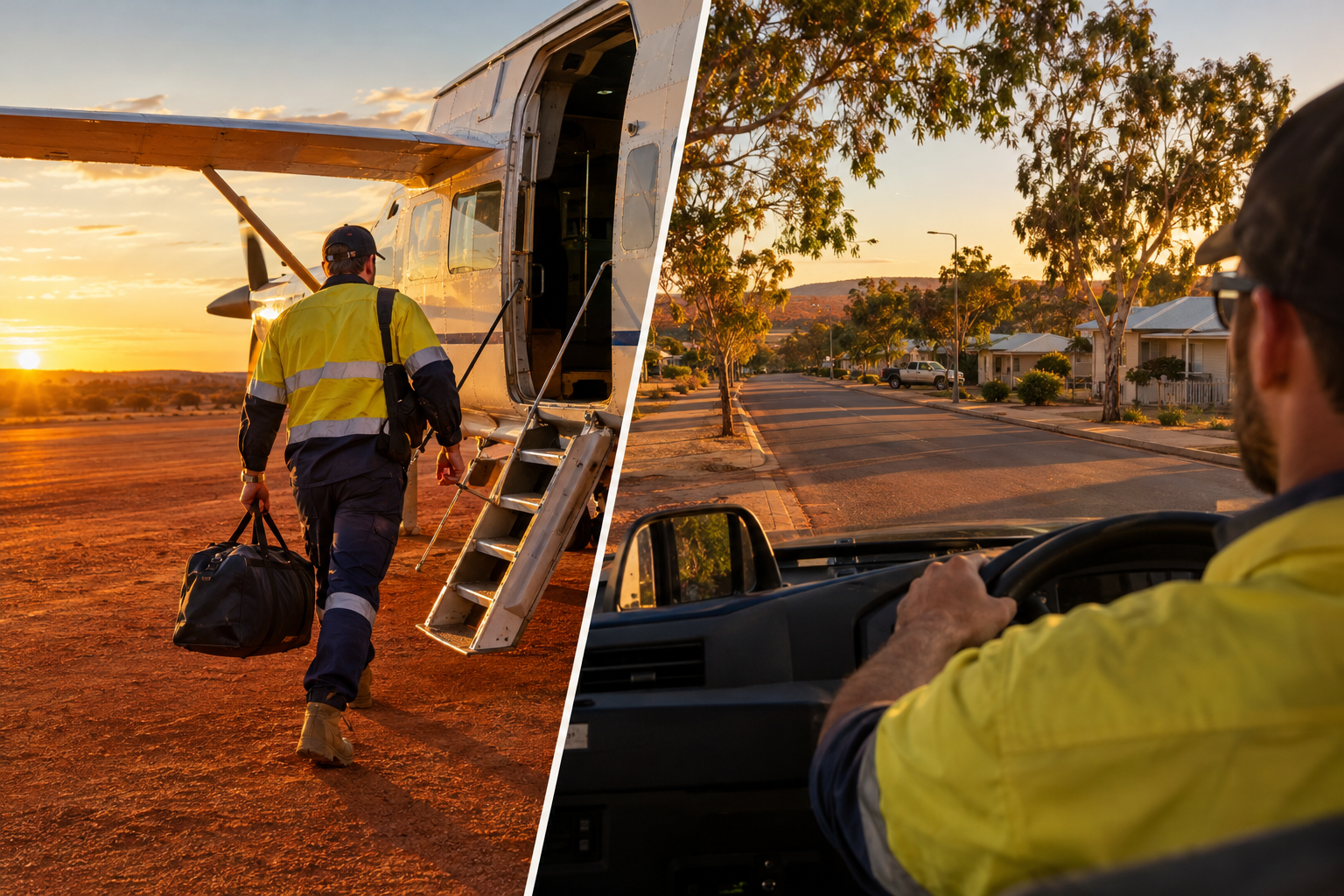
So you want to work in Australian mining, and you've hit the fork in the road: FIFO (fly-in, fly-out from your home city) or residential (live permanently in or near the mining town)?
It's the biggest lifestyle decision in the industry, and neither answer is automatically right. In this guide, we'll compare both paths honestly - pay, home life, career growth and the compromises nobody mentions in the job ads.
Recommended: FIFO Mining Rosters Explained: 2/1, 8/6, Even Time & More
What's the Difference?
- FIFO (Fly-In, Fly-Out): You live wherever you like (usually a capital city), and your employer flies you to the mine site for each swing. You stay in a camp or village while you're on roster
- Residential: You relocate and live permanently in the mining town - places like Kalgoorlie, Mount Isa, Newman or Port Hedland - and drive to site each day like any normal job
- DIDO/BIBO (Drive-In, Drive-Out / Bus-In, Bus-Out): The middle ground. You live at home but travel by road (often long distances) to site for each swing
FIFO: The Pros and Cons
Why People Choose FIFO
- Live where you want. Perth, Brisbane, Melbourne or a coastal town - your postcode doesn't limit your career
- Partner stays employed. Your household keeps two incomes in one city, which residential life often sacrifices
- Real blocks of time off. A week or two at home every swing is long enough to actually switch off
- Camp life is sorted. Accommodation, meals and gyms are provided (though they're a workplace, not a holiday)
Recommended: FIFO Camp Life: What Mining Village Accommodation Is Really Like
The Trade-Offs
- You're away a lot. Birthdays, school events and weekends at home all happen without you on many rosters
- Travel eats time and energy. Airport runs, charter flights and travel days are part of the deal
- The swings are intense. 12-hour shifts in a camp, often on nights, is a genuine grind
Residential: The Pros and Cons
Why People Choose Residential
- You're home every night. Kids grow up with you around, partners get a full-time teammate, pets get fed on schedule
- Real community. Mining towns are tight-knit; you're a local, not a visitor with a duffel bag
- Cheaper living. Town housing and rents are often subsidised, and there's no airport commute
- Career depth. Residential workers often get more training, longer-term projects and faster progression into senior roles because companies invest in the local workforce
Newsletter
Get travel updates straight to your inbox
New guides, working holiday tips and honest advice from the road. No spam, unsubscribe any time.
The Trade-Offs
- You have to relocate. Often to a remote town thousands of kilometres from family and friends
- Your partner's career takes the hit. Work in small mining towns is limited outside the mine itself
- Small-town life isn't for everyone. Fewer services, long drives for anything the town lacks, and the mine is always, always there
- Facilities vary. Some towns (like Kalgoorlie) are proper regional cities; others are small and isolated
Which Pays More?
Honest answer: FIFO usually wins on raw salary, because companies are paying for the inconvenience of flying people in and out. But residential roles often come with housing subsidies, regional allowances and retention bonuses that close the gap - and your cost of living is much lower. Compare total packages, not base salaries, and don't forget to price in what your partner earns (or stops earning) in each scenario.
Recommended: FIFO Mining Salary: What to Expect & Money-Saving Tips
The Questions That Decide It
- Are you single or settled? FIFO suits people maximising income and flexibility; residential suits families who want daily presence
- What does your partner do? If they have a strong career in a city, FIFO protects it. If you're both open to a sea change, residential opens up
- How do you handle isolation? Camps are temporary; a mining town is your actual life. Be honest about small-town living before you sign a lease
- Where are you in your career? FIFO is a great first step into the industry; residential can be the long-game play for progression and stability
Recommended: Is FIFO Work Worth It? 9 Biggest Pros & Cons
Don't Forget DIDO and BIBO
If both extremes feel wrong, look at drive-in, drive-out and bus-in, bus-out operations - common in NSW, Queensland and near regional centres. You get swings like FIFO but sleep at home (or in town accommodation) within driving distance. For workers in regional areas near coal, gold and copper operations, DIDO can deliver mining pay without the flights.
Final Thoughts
FIFO gets you mining money while keeping your city life; residential gives you daily family life and community in exchange for relocating. Plenty of workers do both across a career - start FIFO, build skills and savings, then move residential when family life becomes the priority (or the reverse). The beauty of mining is that the skills transfer either way.
If you're just starting out, begin here:
More FIFO Guides
- What Is FIFO Mining in Australia?
- The FIFO Mining Guide: How to Get Started In the Industry
- FIFO Mining Rosters Explained: 2/1, 8/6, Even Time & More
- Can You Get FIFO Mining Jobs With No Experience?
- FIFO Mental Health: Looking After Yourself (and Each Other) on a Roster
Newsletter
Get travel updates straight to your inbox
New guides, working holiday tips and honest advice from the road. No spam, unsubscribe any time.
Enjoying the guide?
There are plenty more where that came from: honest guides from every corner of Australia and beyond.