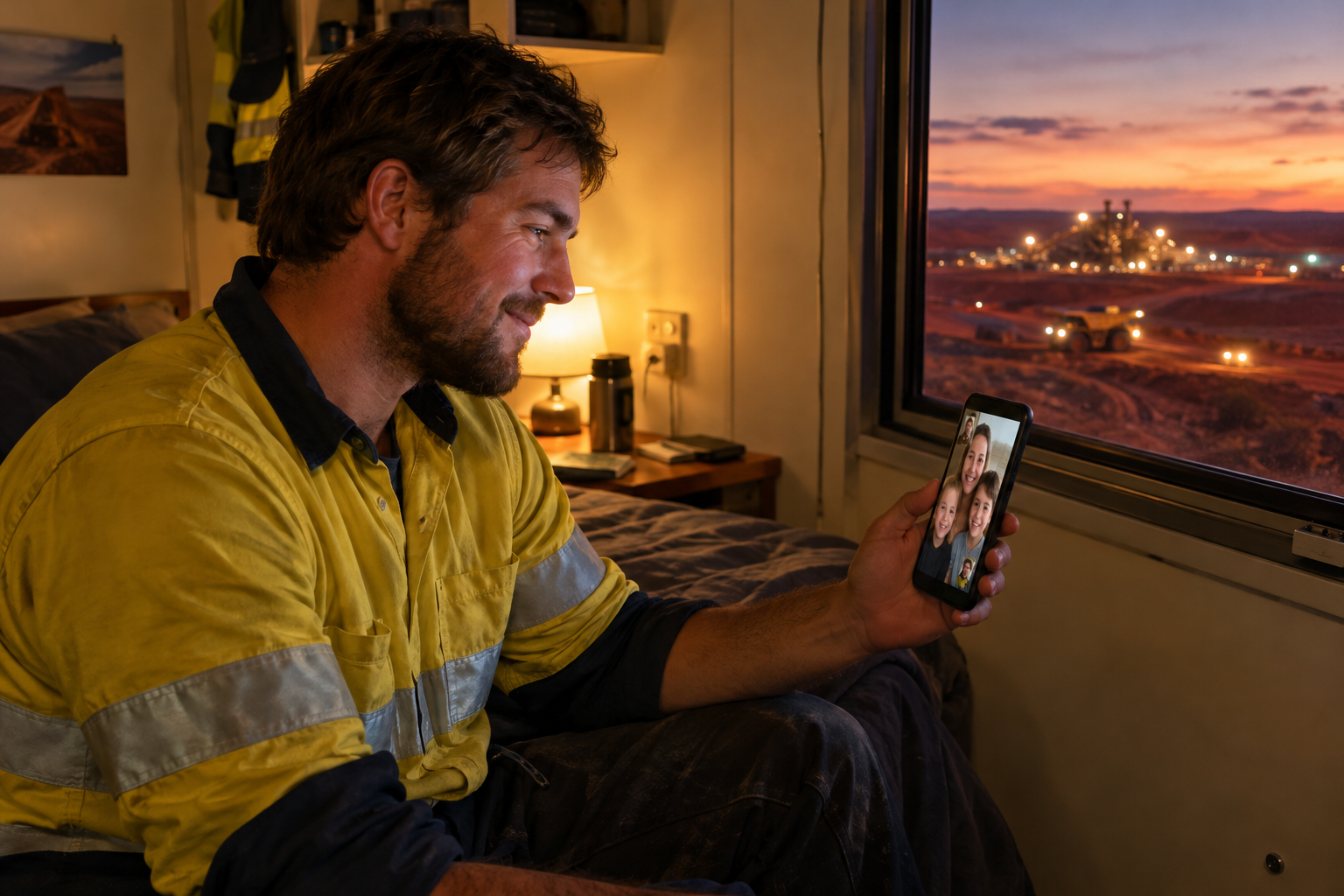
Let's talk about the part of FIFO life that doesn't make it into the salary brochures: the mental side of being away.
If you've spent any time around mining towns or FIFO forums, you already know this is real. Long swings, night shift, time away from partners and kids, and the pressure to "harden up" can quietly pile up. The good news is that FIFO workers and the industry have got a lot better at talking about it - and there are proven routines and free services that genuinely help.
This guide is practical, not preachy: why FIFO is tough on mental health, what to watch for in yourself and your mates, and what actually works.
If You Need Help Right Now
Before anything else, know where to turn. These services are free, confidential, and many operate 24/7:
- Lifeline Australia: 13 11 14 (24/7 crisis support) or text 0477 13 11 14
- Beyond Blue: 1300 22 4636 (24/7)
- MensLine Australia: 1300 78 99 78 (24/7, focused on men)
- 13YARN: 13 92 76 (24/7 support for Aboriginal and Torres Strait Islander people)
- Your site's EAP (Employee Assistance Program) - most mining contractors provide free confidential counselling sessions. Ask HR or check your site induction info. Using it is normal and it doesn't go on any record
Recommended: Mental Health Leave in Australia: What You're Entitled To
Why FIFO Is Hard on Mental Health
FIFO work isn't inherently bad for you - plenty of workers thrive on it for decades. But it stacks up specific pressures that don't exist in a normal 9-to-5:
- Long swings away from your people. Two weeks is a long time to miss birthdays, school events, or just a normal Tuesday dinner
- Twelve-hour shifts, often nights. Fatigue and isolation feed each other
- Disrupted sleep. Sleeping in daylight, rotating shifts, and camp noise all chip away at your resilience
- The "first week home" crash. Many workers ride adrenaline on site, then crash physically and emotionally in their first days off
- Stiff upper lip culture. In a lot of crews, admitting you're struggling still feels risky, so problems stay hidden until they're big
Recommended: FIFO Mining Rosters Explained: 2/1, 8/6, Even Time & More
Warning Signs to Watch For
In yourself or a mate, these are the signals that matter more than anyone's tough talk:
- Pulling away. Skipping meals in the mess, eating alone in the room, going quiet in group chats
- Sleep going off the rails beyond normal shift lag - can't sleep, or sleeping every spare hour
- Short fuse. Snapping at small things on site or at home
- Drinking or gambling more on days off, or counting down to it
- "I'm fine" on repeat, especially when it replaces actual conversation
- Talking about being a burden, or not seeing the point - take this seriously every single time
None of these make someone weak. They're normal human responses to a demanding lifestyle, and they respond well to support.
What Actually Helps: Routines That Work
The workers who last in FIFO treat their wellbeing like part of the job. Here's what consistently makes a difference:
1. Protect Your Sleep Like It's a Safety Procedure
Because it is one. Blackout mask, earplugs, consistent wind-down, and no doom-scrolling for the first hour in the rack. If you're on night shift, keep your daytime sleep schedule stable even on your days off (at least for the first few).
Newsletter
Get travel updates straight to your inbox
New guides, working holiday tips and honest advice from the road. No spam, unsubscribe any time.
2. Use the Camp Gym
Not for a transformation challenge - just for moving your body most days. Exercise is the cheapest, most reliable mood tool there is, and the camp gym also gets you out of your room and around other people.
Recommended: FIFO Camp Life: What Mining Village Accommodation Is Really Like
3. Stay Connected on Purpose
Set a regular call time with your partner, kids, parents or mates - same days each week so it becomes routine. A five-minute message beats a two-hour call that never happens. And keep photos or reminders of home in your room; it sounds small, it isn't.
4. Have Something Waiting at Home
The swing is easier when your days off have shape: a trip booked, a project on the go, a footy team, a course. Even-time rosters (like 7/7) suit workers who build real lives around their time off.
Recommended: Is FIFO Work Worth It? 9 Biggest Pros & Cons
5. Look After Your Mates
This is the one FIFO crews genuinely own. If someone goes quiet, ask twice: "How are you going?" then, "No seriously, how are you going?" You don't need to fix anything - listening is the intervention. Sites run mental health awareness training (like MATES in Construction); if yours offers it, do it. Knowing how to have the conversation is a skill, and it saves lives.
6. Talk to Someone Before It's Urgent
EAP sessions, a GP, or a phone service like MensLine don't require a crisis. Plenty of FIFO workers check in with a counsellor the way they'd see a physio for a sore shoulder - maintenance, not emergency.
For Partners and Families at Home
FIFO is tough on the people holding the fort too. A few things that help households:
- Agree on communication rhythms early - how often you'll call, and what you'll do when a swing goes sideways and plans slip
- Plan the re-entry. The first 24 hours home can be clunky. Some couples use it for logistics and rest, and save big conversations for day two
- Know the signs on both ends. Isolation, irritability and "fine" happen at home as much as on site
- Use the support services too. Partners of FIFO workers can access counselling and community groups - you don't need to be the one on the plane to need backup
The Industry Is Changing
It's worth knowing the culture has shifted. Major miners and contractors now run mental health programs, suicide prevention partnerships (like MATES in Mining), and mental health first-aid training on site. Many workers wear it proudly: looking after your head is treated like looking after your PPE. If your site's culture is lagging behind, be part of the change - the conversations you start on your swing might be the ones that matter most.
Final Thoughts
FIFO work can be brilliant: strong money, real blocks of time off, and a trade you can build a life on. But it only works if you look after the person doing it. Sleep properly, move daily, stay connected, know your warning signs, and never carry it alone.
If you take one thing from this guide, take the numbers at the top. Save them in your phone before your next swing.
More FIFO Guides
- What Is FIFO Mining in Australia?
- FIFO Mining Rosters Explained: 2/1, 8/6, Even Time & More
- FIFO Camp Life: What Mining Village Accommodation Is Really Like
- FIFO Mining In Australia: Work Conditions & Lifestyle
- 7 Top Tips to Practise Good Mental Health as an Expat
Newsletter
Get travel updates straight to your inbox
New guides, working holiday tips and honest advice from the road. No spam, unsubscribe any time.
Enjoying the guide?
There are plenty more where that came from: honest guides from every corner of Australia and beyond.