
Booking a flight to Australia is the first proper decision of the whole move, and it is the one people get wrong most often. Not because they pick a bad airline, but because they book the first reasonable price they see, four weeks out, with a bag that turns out to cost extra.
These are the habits I use, most of them pulled straight out of my ebook because people kept asking me in the DMs how I find fares.
Start Looking Earlier Than Feels Sensible
Airlines generally open their schedules around 11 months ahead. That is not usually the cheapest moment to buy, but it is the right moment to start watching, because it gives you months of price history on the exact route you want.
So the practical version: work out roughly when you want to land in Australia, then put a price alert on those dates about 10 to 11 months out. You do not have to be certain about the day. You just need to be watching.

Book Direct With the Airline Where You Can
This is the one piece of advice I would tattoo on people. Book with the airline, not a third-party site, whenever the price is close.
The reason is boring and only matters when things go wrong: if a flight is cancelled, delayed or rescheduled, the airline talks to its own customers first. If you booked through an agent, you are the agent's customer, and you find out what is happening when the agent decides to tell you. A small saving is not worth being the last person to know your flight moved.
Be Flexible and Let the Tool Do the Work
Prices swing wildly by day of the week, time of day and season. Google Flights is the best free tool for this, because it shows you a grid of prices across a whole month instead of one date at a time.
Two things I use constantly:
- The date grid and price graph. Find the cheap cluster instead of guessing. Shifting your trip by two days can be hundreds of dollars.
- The "anywhere" search. If you are open to where you land first, it will show you the cheapest places you could fly to from your home airport. Handy if you fancy a stop in Asia before Australia.
Set Price Alerts, Properly
This is the exact process from my ebook, because people kept asking me in the DMs how to book flights at all. It takes about a minute.
1. Go to Google Flights.
2. Put in your trip details: return or one way, how many people, your rough dates, and your departure and arrival airports.
3. Hit search. A list of flights appears, and just below the search boxes there is a Track prices toggle.
4. Switch it on. You get an email every time the price changes on those dates.

You can track a specific date range, or hit Any dates if you are not set on a day. Right next to it are two buttons worth knowing:
- Date grid shows a grid of prices for the days around your trip, so you can shift by a day or two and see what it saves.
- Price graph shows the trend over weeks, which is how you spot a dip instead of guessing.
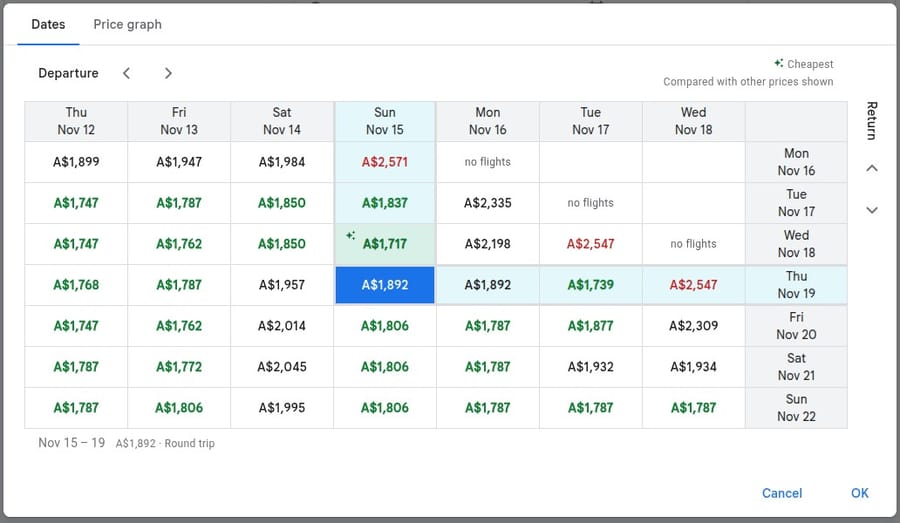
Here is the date grid from a real search I ran, London to Sydney return in November. My dates were A$1,892. Moving the return to the Wednesday dropped it to A$1,717, and every green number on that grid is cheaper than what I had picked. That is a few hundred dollars for changing a day.
And this is the price graph for the same route. Each bar is a departure date, and the tooltip shows the cheapest fare for a four-day trip from that day. Mid November sits around A$1,800 to A$2,000, then the bars climb towards A$3,000 and beyond through Christmas and January. Same flight, same seat, more than a thousand dollars apart.
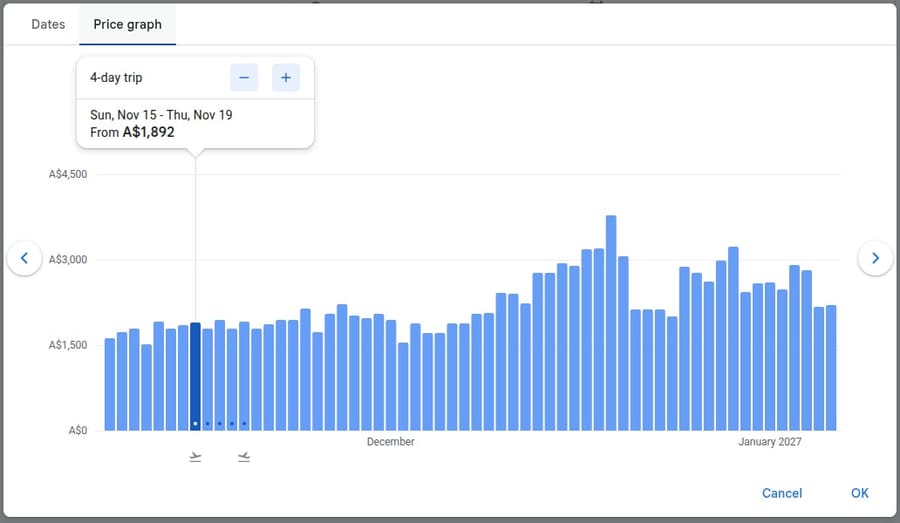
Prices move constantly, so treat those numbers as an example of the pattern rather than today's fare. The pattern is the point: shoulder season is cheaper, and the days either side of your first choice usually are too.
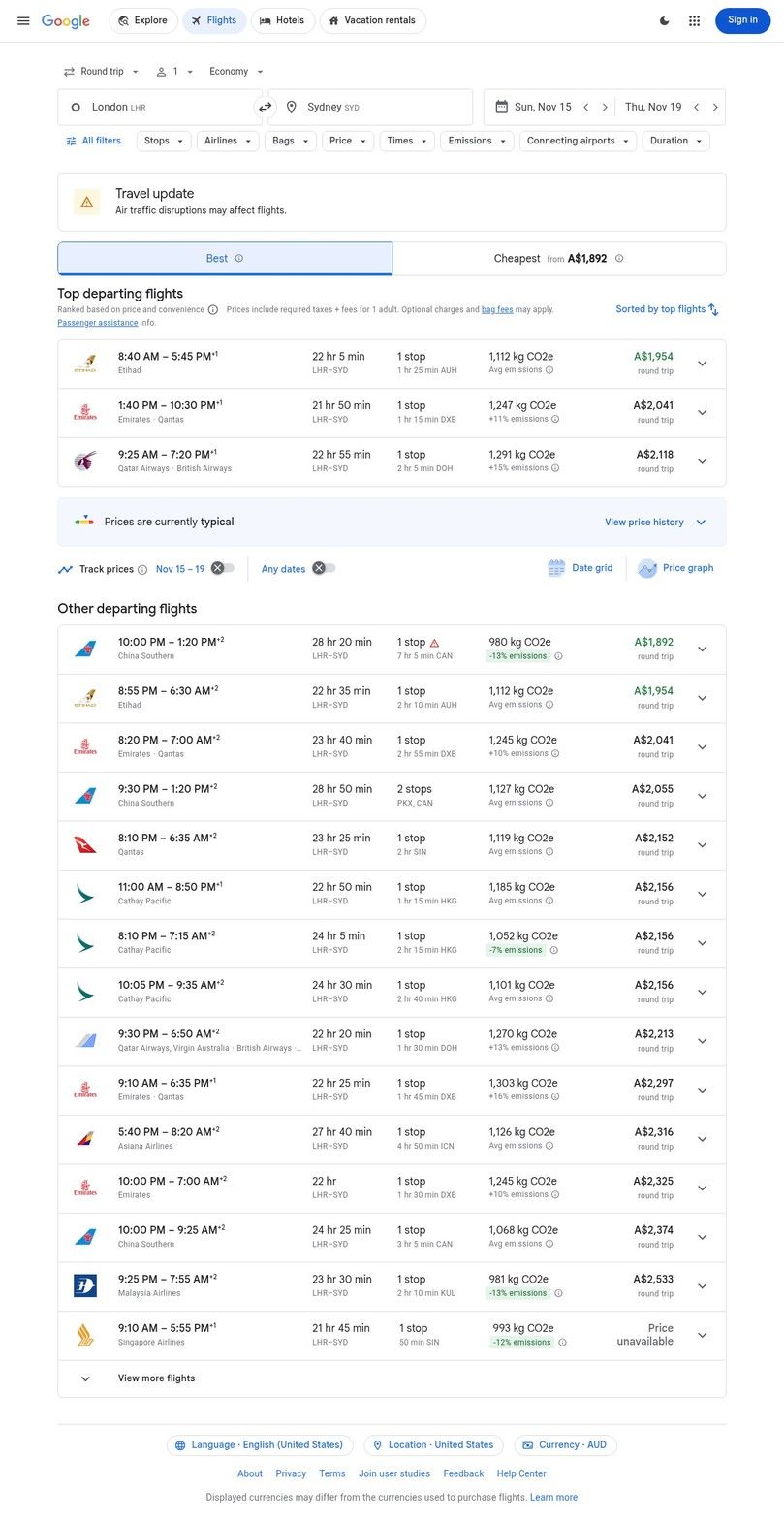
The other thing I love about Google Flights: it tells you whether a fare is actually good. The results page carries a line like "Prices are currently typical" or "Prices are currently low", plus a price history you can open. That is the difference between booking because you are nervous and booking because the number is genuinely cheap. If it says prices are higher than usual, set the alert and leave it alone for a while.
Incognito Mode Costs Nothing
Use a private window when you search. Some travel sites do track your searches, and while the "prices go up because you looked twice" story is overstated, searching privately takes zero effort and removes the question.
Check the Airports Around You
Look at secondary airports at both ends. Flying out of a smaller airport near home, or landing at a secondary airport in Australia, can be cheaper even after you add a train or bus. It can also be much worse, so price the whole journey, not just the fare.
Layovers Are Where the Savings Live
Direct is convenient, not cheap. One stop often cuts a long-haul fare substantially, and if you are not in a hurry, a long layover is a free mini trip. I would happily take a night in Singapore or Doha over paying full price for a direct.
Two rules if you do it:
- Leave a real gap between connections. If you book separate tickets and miss the second flight, your travel insurance will usually not cover it.
- Check the baggage rules on every leg. A cheap multi-airline itinerary often has one leg with no checked bag included.
The Hidden-City Trick, With the Honest Warning
Sites like Skiplagged show you fares where your destination is really a stopover on a cheaper flight to somewhere else, or itineraries with very long layovers you can use to see a city.
It works, and it is a fun way to break up a long trip. But be clear about the risk: you are booking a flight you do not intend to finish, airlines dislike it, you cannot check a bag (it goes to the final destination), and missed connections are on you. Do your homework before you press buy.
Baggage Is Where Cheap Fares Stop Being Cheap
A fare that looks $150 cheaper can vanish the moment you add a checked bag, a seat and food. Before you compare two flights, add the bag you will actually travel with, plus the seat selection if you care. Compare the total, not the headline.
For a working holiday, one checked bag plus a carry-on is usually plenty. You can buy warm clothes in Australia for less than an extra bag costs.

The Points Game Is Real
Frequent flyer points are the single biggest flight saving I have had. Two of mine, from my own bookings:
- Sydney to Perth, return, October 2023: 25,000 Qantas points plus about $250 in taxes and fees. Paying cash for the same trip in school holidays was around $900.
- Sydney to Los Angeles, return: 92,500 points plus about $500 AUD.
I fly Qantas because I live in Australia and it is the easiest program to earn into here. Points come from flights with Qantas, Jetstar and partners, but mostly from everyday spending: credit cards, shopping portals, and bonus-point promotions. I have picked up big point hauls on gift card promotions at Woolworths and Big W without touching a credit card at all.
Velocity (Virgin Australia) works the same way, and Flybuys and Woolworths Rewards points can be converted across. If you travel a lot internationally, Singapore Airlines KrisFlyer, Emirates Skywards and Cathay Pacific Asia Miles are the other ones worth a look.
Start earning before you leave home, not after you land. Two guides on this site go deeper:
Points expire in most programs, so keep the account active even if you are not flying much.
Book Around Your Visa, Not Just the Price
Your working holiday visa has a start date, and your flight should land after it. Give yourself a few days of slack rather than flying on the exact day the visa begins, in case of delays.
Also check what your visa or airline asks for at the border. Some arrivals get asked for an onward or return ticket, and the working holiday visa rules are the place to confirm what applies to you before you book anything non-refundable.
When Should You Actually Book?
My honest answer: book when the price is right for your budget, not on a magic date. There is no universal "book 54 days out" rule that survives contact with real fares. Track the route, compare the total cost with bags, and buy when a fare sits in the cheaper-than-usual band and you would be happy paying it.
What I would avoid is booking a non-refundable long-haul fare the same week you decide to move. You will pay peak prices and you will have no flexibility if your plans shift.
The Short Version
- Start watching 10 to 11 months out, with a price alert on your rough dates.
- Book direct with the airline when the price is close.
- Use the date grid and "anywhere" search to find the cheap cluster.
- Price layovers and bags into the total, not just the fare.
- Earn points before you fly, and never pay interest to earn them.
- Leave slack around your visa start date.
Get the flight right and the rest of the move feels a lot cheaper. If you are still working out the money side of landing, start with what living in Australia actually costs.
Newsletter
Get travel updates straight to your inbox
New guides, working holiday tips and honest advice from the road. No spam, unsubscribe any time.
Enjoying the guide?
There are plenty more where that came from: honest guides from every corner of Australia and beyond.